 EN

Importing Windows from China to USA: Key Points for American Home & Commercial Buyers
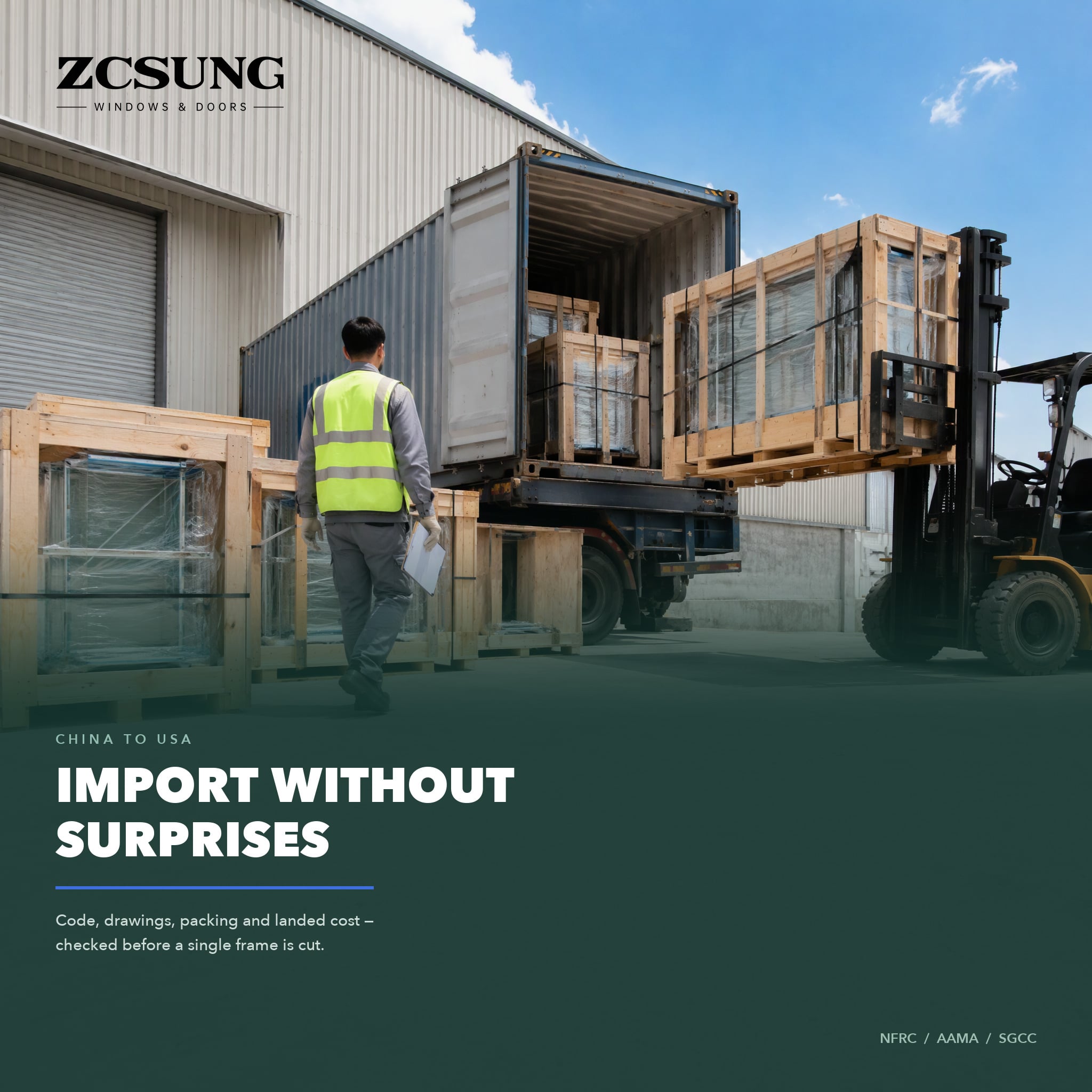
Many American builders, villa owners and commercial contractors choose to import windows from China to balance custom design, performance and budget. But importing windows from China to USA carries unique risks that local purchases do not have. Even a high-quality China window supplier can create costly delays if specs, certification, rough opening and US building codes are not locked in before production. At ZCSUNG, we work closely with US clients to eliminate common pitfalls for aluminum window orders, from NFRC thermal ratings and SGCC safety glass marking to nail fin configuration and sea-freight export packing.
If you plan to import windows from China to USA, the whole decision chain starts with local code compliance, then drawing confirmation, material certification, landed cost, factory QC, shipping protection and after-sales warranty. Skipping any checkpoint can lead to failed municipal inspection, on-site rework, glass breakage or unexpected tariff charges.
1. Local Building Code & Certification Compliance (Most Critical)
Certification is the top priority when you import windows from China to USA, and different states, counties and climate zones enforce different rules.
- NFRC: Mandatory thermal rating label for energy codes such as California Title 24 and Energy Star. NFRC provides official U-value, SHGC and VT data; a self-made performance sheet cannot replace valid NFRC reports for permit inspection.
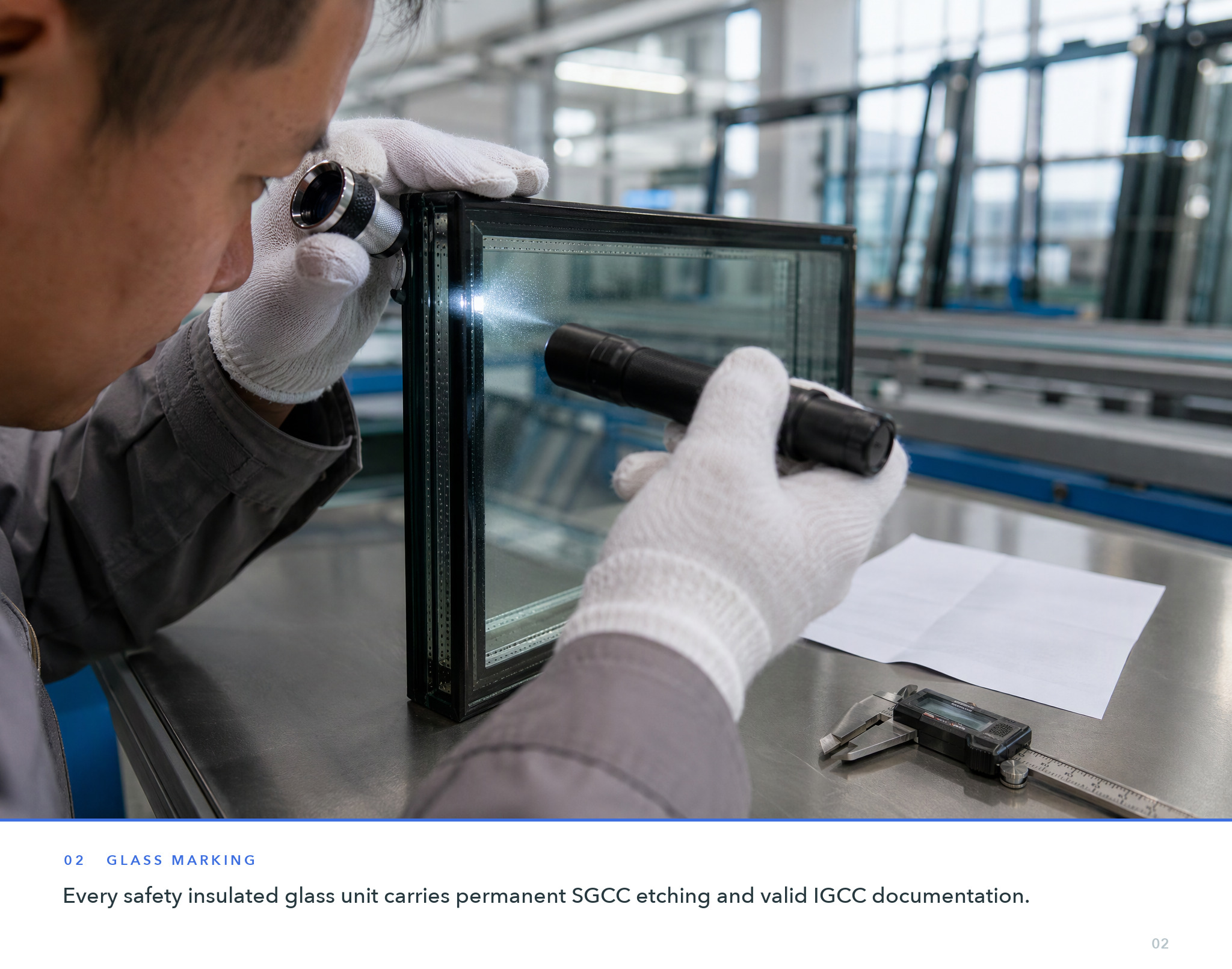
- IGCC + SGCC: Insulated glass must hold IGCC certification, and all safety tempered or laminated glass needs permanent etched SGCC marking following ANSI Z97.1. Stick-on labels will be rejected by US inspectors.
- AAMA / NAFS: Air, water and structural performance must meet AAMA/WDMA/CSA 101. Hurricane zones (Florida, coastal areas) require extra Miami‑Dade NOA, TAS or ASTM impact test reports, not just standard window testing.
- Egress rules: Bedrooms and basement escape windows must satisfy US emergency exit size and opening limits. Many China window supplier default opening sizes do not meet local egress requirements.
A common mistake: buyers assume “certified glass” means the full window assembly is approved. Glass certification and whole-unit fenestration certification are separate. ZCSUNG prepares matching test documentation for glass and frame assembly for every US-bound batch.
2. Rough Opening, Nail Fin & Dimension System (Metric vs Imperial)
This is where most US orders run into fitment trouble. China window factories normally work in millimeters, while US construction uses imperial rough opening (R.O.) and nail fin installation systems.
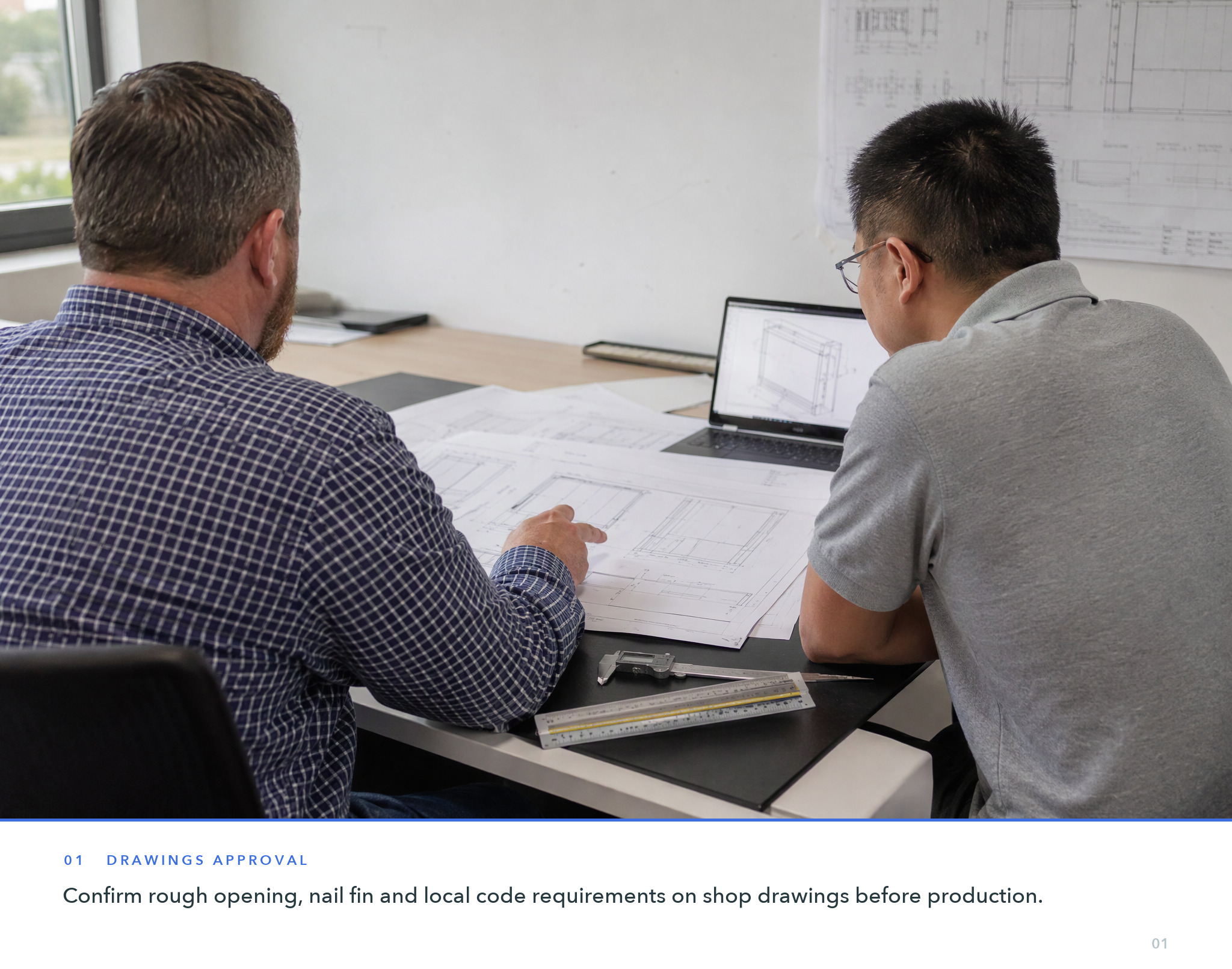
- Clarify: rough opening size vs frame outer dimension, nail fin style (integral / applied), fin width, setback and flashing groove. If the factory makes frames only to your finished frame size without reserving installation clearance, the windows will not fit the wall opening.
- Confirm handing, tilt/turn direction, mullion layout, sill height and exterior projection on shop drawings. Once drawings are signed off, the China window supplier should not change dimensions without written approval.
- If you use US standard brick mold, siding or stucco, share your exterior wall detail with the factory, so drainage and flashing grooves match your installer’s workflow.
At ZCSUNG, our engineering team converts your architectural drawings into US-standard shop drawings, marking rough opening tolerance, nail fin position and weep hole layout for installers.
3. Material, Hardware & Glass Spec Lock-In
When you import windows from China to USA, write every material item into the contract and BOM. Price comparison without fixed specs is meaningless.
- Aluminum: Confirm alloy grade (6063-T5 / T6), wall thickness, powder coating AAMA 2604 / 2605, coastal salt-spray requirement if near ocean.
- Glass: Low-E coating side, argon filling rate, spacer type, triple or double glazing, laminated safety glass for impact zones. IGCC serial numbers must match batch records.
- Hardware: Select ANSI-grade hardware, confirm corrosion resistance for humid or coastal areas. Multi-point locks, hinges and rollers must fit US installation habits. Many cheap China window supplier use generic hardware that fails after one or two years.
- Gasket: Require continuous EPDM gaskets, not spliced rubber strips, to keep air and water tightness over cold and hot cycles.
4. Tariff, HTS Code & Full Landed Cost
Do not only compare EXW or FOB price. When you import windows from China to USA, calculate full landed cost: product value, ocean freight, insurance, customs brokerage, duty, Section 301 tariff, port fee, inland drayage and inspection cost.
- Aluminum fenestration falls under specific HTS codes; misclassification can trigger extra duty or customs hold.
- Incoterm must be clear: EXW, FOB, CIF or DDP. DDP shifts duty and customs clearance to the supplier, but you still need to confirm the scope of insurance and liability for damage.
- Currency fluctuation, container shortage and peak-season freight surcharges can easily blow your budget. For large commercial projects, lock pricing and lead time in the sales contract.
5. Factory QC & Third-Party Pre-Shipment Inspection
Even with good drawings, batch variation exists. A reliable China window supplier should run IQC, IPQC and OQC, as we covered in our production QC article.
- Ask for QC checklist, sample dry-fit, water spray test and dimensional check records before shipment.
- For big villa or commercial batches, arrange third-party inspection (SGS, Intertek or local appointed inspector) at the factory before loading. Inspectors can verify SGCC marks, NFRC labels, diagonal squareness, gasket continuity and drainage function.
- Random lab sampling for air infiltration, water penetration and wind load is highly recommended for hurricane or high-performance projects.
6. Export Packing & Container Loading
Window damage during ocean transit is one of the biggest hidden headaches for US buyers. Fragile insulated glass and thin extruded frames need dedicated protection.
- Each unit gets protective film, foam corner guards, separating pads between glass surfaces.
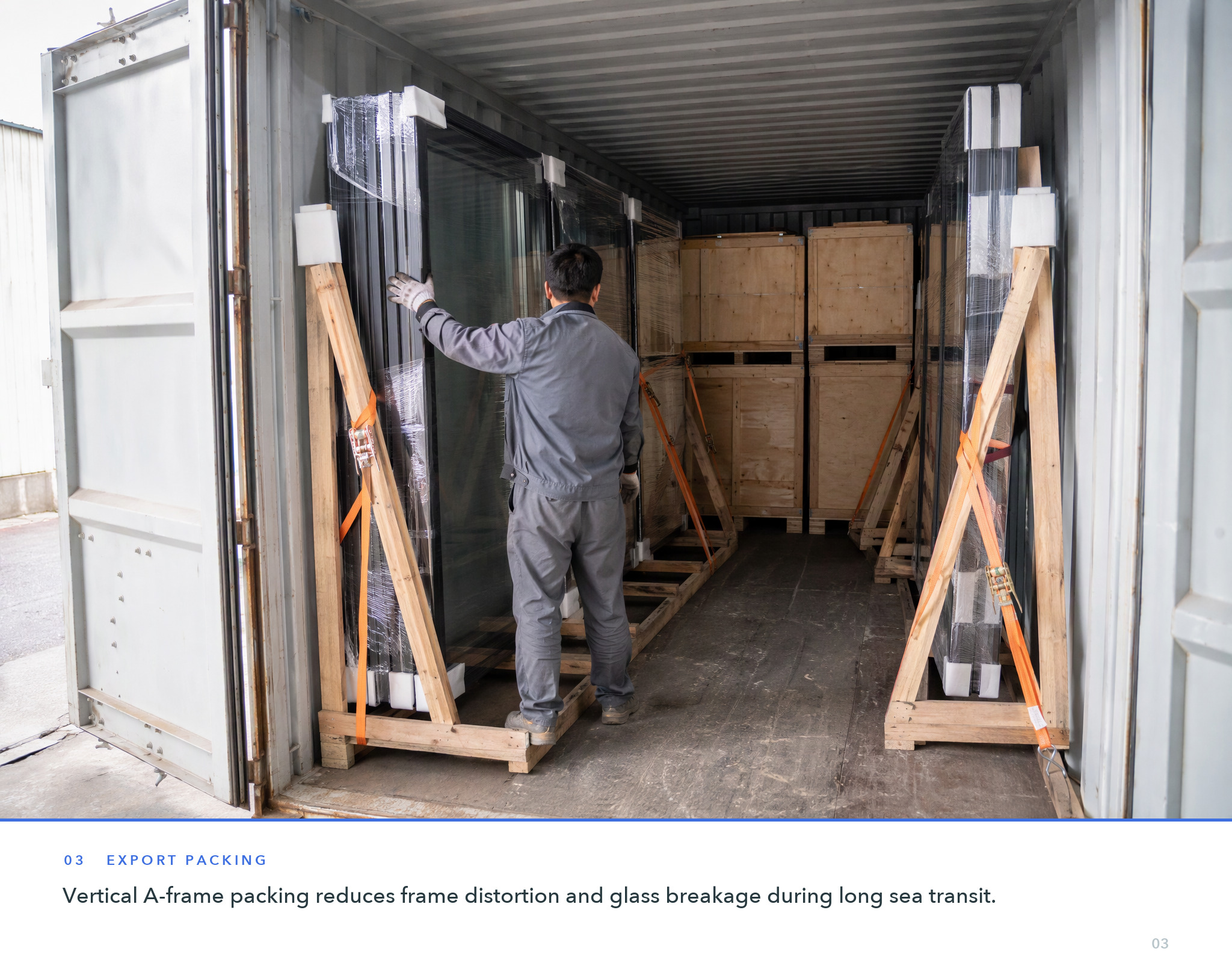
- Large windows go into reinforced plywood export crates. For high-value orders, A-frame vertical loading inside the container is preferred, to avoid frame racking and glass cracking.
- Mark every crate with project code, unit ID, rough opening info and QR traceability tag. Accessories, screws, flashing and installation hardware should be packed separately with clear labels.
- Before container sealing, confirm moisture barrier and securing straps. ZCSUNG’s export packing procedure is tailored for long ocean shipping to US west and east coast ports.
7. Installation Guidance, Warranty & Spare Parts
Most China window supplier do not provide on-site installers in the US, so installation responsibility must be defined clearly.
- Request official installation manual, flashing detail, drainage maintenance guide and video tutorials for your local contractors. Wrong installation can break water tightness, even if the window itself passes lab testing.
- Clarify warranty scope: frame coating, insulated glass seal failure, hardware, labor and transit damage. Most factory warranties do not cover on-site labor or improper installation.
- Order spare hardware, gaskets and setting blocks together with the main shipment. If you need replacement parts 1–2 years later, re-shipping small items from China will cost extra time and freight.
8. Lead Time & Project Schedule Buffer
The full cycle to import windows from China to USA includes drawing confirmation, sample approval, mass production, packing, ocean transit and customs clearance. For custom aluminum windows, the total timeline often runs 10–16 weeks.
- Add a 2–3 week buffer to your construction schedule. Delays in drawing revision, inspection hold or customs release can push your whole project behind.
- Confirm sample lead time first. Always approve a finished sample before mass production, especially for special colors, narrow frames or large glass walls.
Why Work With ZCSUNG for Your US Window Project
As an experienced China window supplier serving US residential and commercial clients, ZCSUNG integrates all these checkpoints into our order workflow. We supply IGCC and SGCC certified insulated glass, support NFRC testing, follow AAMA performance standards and produce aluminum windows with US nail fin and rough opening requirements. We provide transparent landed-cost estimation, documented QC, export-grade plywood packing and detailed installation documentation. Whether you are sourcing casement windows, sliding doors, picture windows or impact-rated coastal systems, we help you reduce compliance risk and avoid costly site surprises.
If you are ready to start your project, send us your architectural drawings and local energy / wind-load requirements, and our engineering team will prepare shop drawings, certification package and formal quotation.
FAQ
Q: Can windows made in China pass US building permit inspection?
A: Yes, if the assembly holds required NFRC ratings, glass carries permanent SGCC etching, and performance matches local code. Missing certification is the main reason for permit rejection.
Q: Is nail fin included by default from China window factories?
A: No. Nail fin style, width and setback must be specified on drawings. Many factories produce flush frames without nail fin unless requested.
Q: Who takes responsibility if windows break during sea shipment?
A: It depends on Incoterm, packing standard and cargo insurance. We define damage liability clearly in contract and use vertical A-frame packing for high-risk large glass units.
Q: What should I send the factory first?
A: Local code requirements, rough opening schedule, wall section detail, egress rules, glass specs and approved sample reference.
https://zcsung.en.alibaba.com/index.html?spm=a2700.shop_plgr.88.9.1f327121bf2nst
Table of Contents
-
Importing Windows from China to USA: Key Points for American Home & Commercial Buyers
- 1. Local Building Code & Certification Compliance (Most Critical)
- 2. Rough Opening, Nail Fin & Dimension System (Metric vs Imperial)
- 3. Material, Hardware & Glass Spec Lock-In
- 4. Tariff, HTS Code & Full Landed Cost
- 5. Factory QC & Third-Party Pre-Shipment Inspection
- 6. Export Packing & Container Loading
- 7. Installation Guidance, Warranty & Spare Parts
- 8. Lead Time & Project Schedule Buffer
- Why Work With ZCSUNG for Your US Window Project
- FAQ