 EN
EN

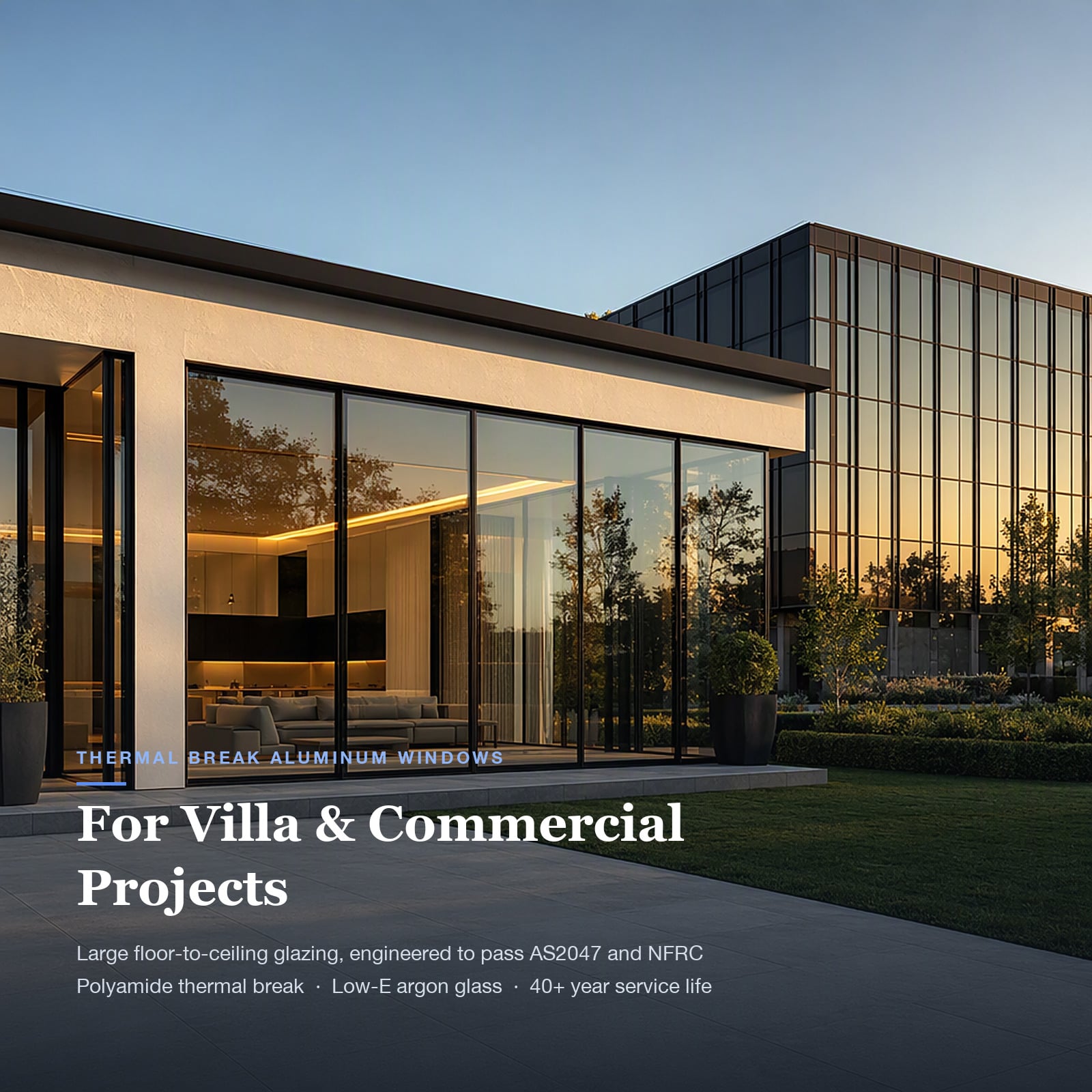
Choosing the right window material is one of the most critical decisions for villa renovations and new commercial construction across Australia and North America. Homeowners, builders, and project managers constantly weigh up thermal break aluminum windows and UPVC windows, trying to balance energy performance, structural safety, long-term maintenance, and project budgets.
Both options deliver energy-saving benefits, yet they behave very differently under extreme weather conditions, high wind loads, and decades of daily use. This guide breaks down the core differences between aluminum vs UPVC windows, with practical insights tailored to residential villa builds and commercial developments. We also cover key certification standards including NFRC and AS2047 to help you make compliant purchasing decisions.
1. Thermal Insulation & Energy Efficiency
Energy efficient windows directly reduce HVAC running costs, especially in cold winter zones and hot summer regions.
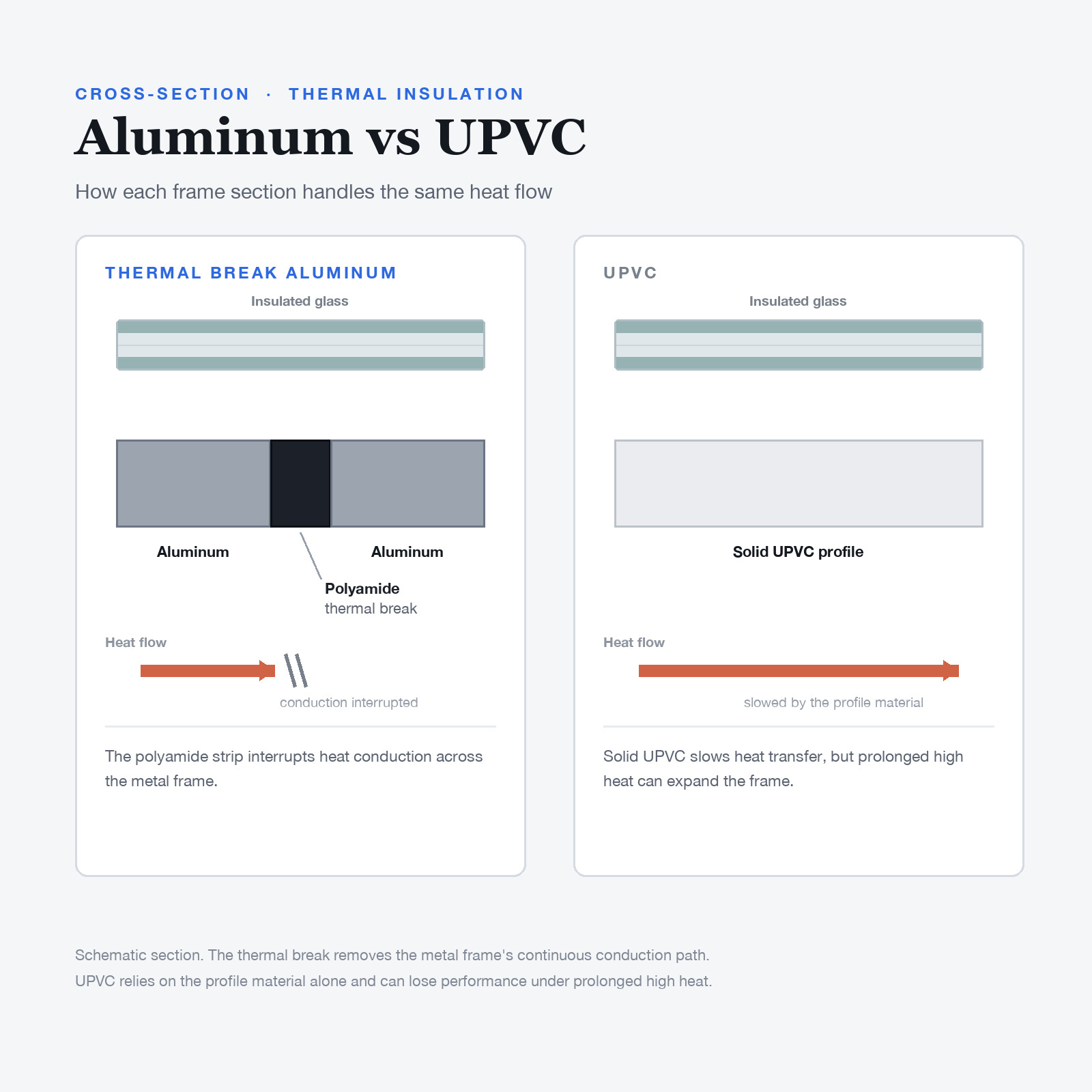
UPVC windows have naturally low thermal conductivity. Solid UPVC profiles slow heat transfer well, delivering decent U-values for low-rise residential projects. However, standard UPVC frames lose performance when exposed to prolonged high temperatures; frame expansion can compromise seals over time.
Thermal break aluminum windows use a reinforced polyamide strip separating the interior and exterior aluminum sections. This interrupts heat conduction across the metal frame. When paired with Low-E insulated glass and argon gas filling, thermal break aluminum systems achieve excellent NFRC-rated U-values. Unlike basic UPVC, high-performance thermal break aluminum maintains consistent insulation even for large window spans common in modern villas and commercial facades.
For large glass curtain walls, floor-to-ceiling villa windows and multi-story commercial buildings, thermal break aluminum systems offer far more reliable energy performance at bigger sizes.
2. Service Lifespan & Structural Strength | Wind Resistance
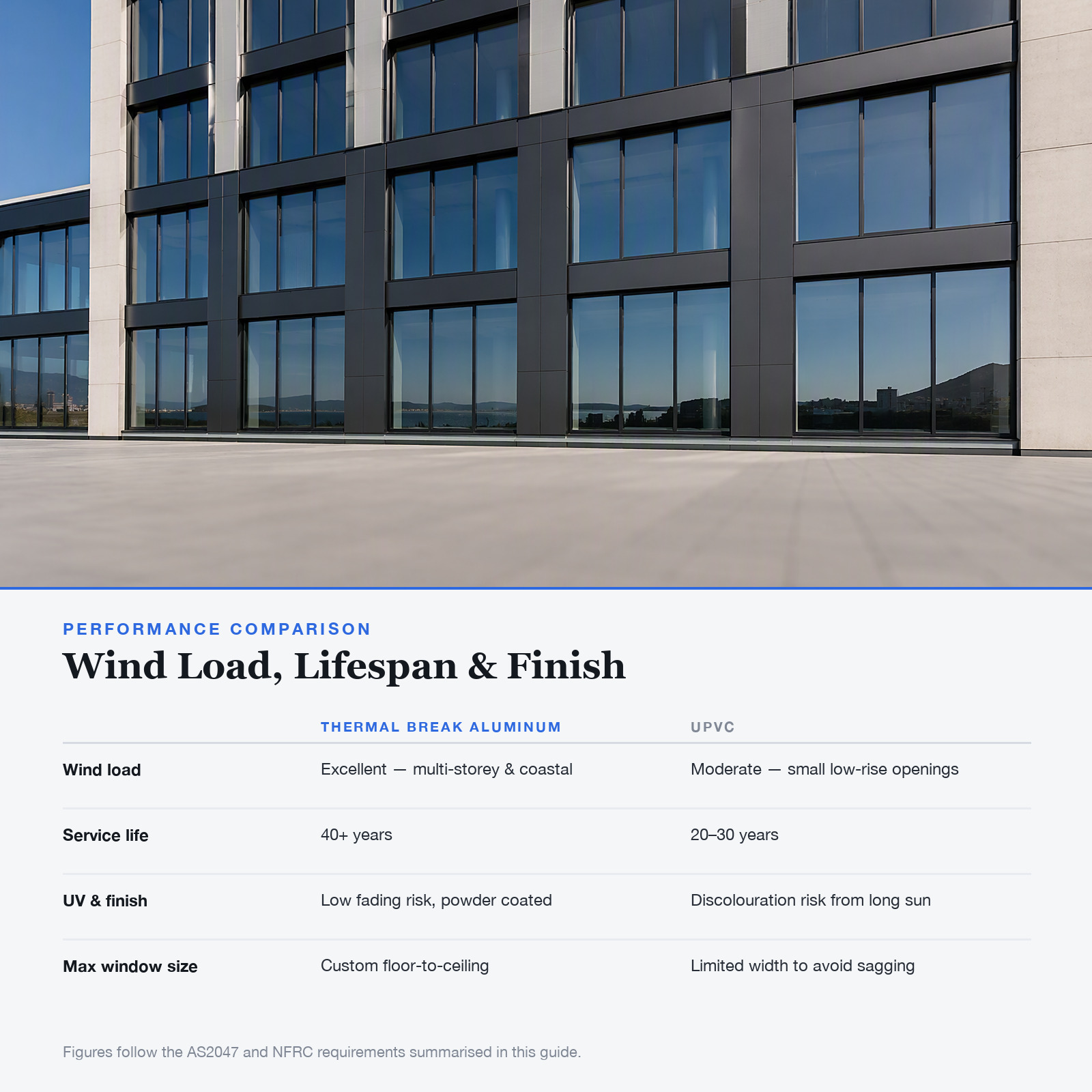
Structural integrity is non-negotiable for coastal Australian locations and storm-prone North American areas, where buildings must meet strict wind pressure requirements under AS2047 (Australia) and local North American building codes.
UPVC profiles are rigid but less structurally robust. Large UPVC window units may sag over many years, especially for wide openings. UPVC can become brittle in extreme cold and soften under intense heat, limiting maximum panel dimensions.
Thermal break aluminum windows feature high tensile strength aluminum alloy frames. The rigid profile supports oversized glass panels and withstands high wind loads, which is essential for multi-story commercial buildings and cliffside or coastal villa projects. Our factory’s thermal break aluminum system windows are engineered to pass AS2047 and NFRC testing. Properly installed, these aluminum windows can serve buildings for 40+ years with minimal frame deformation.
3. Maintenance Requirements
UPVC windows are widely promoted as low-maintenance. The surface does not require painting, and simple soap-and-water cleaning works for routine upkeep. The main long-term risk: UV radiation can gradually fade and degrade UPVC over decades, leading to discoloration and seal failure.
Thermal break aluminum frames are powder-coated. A high-quality powder coat provides strong UV resistance against fading, chalking and corrosion. For villa and commercial projects, periodic surface cleaning is all that is needed. There is no repainting requirement. The only wear points are rubber gaskets and hardware, which can be replaced easily if needed. Compared to UPVC, aluminum holds its aesthetic finish much longer in harsh outdoor environments.
4. Certification Compliance for AU & North America
For export projects, window certification is mandatory and directly affects project approval.
- AS2047: Australian standard for windows and external glazed doors, covering structural performance, water penetration and air leakage. Thermal break aluminum systems are easier to certify for large-size commercial openings. Many standard UPVC windows can only meet AS2047 for smaller residential sizes.
- NFRC: North America’s rating system for U-factor, solar heat gain, air leakage and visible transmittance. Both materials can obtain NFRC labels, but premium thermal break aluminum systems achieve top-tier NFRC ratings when matched with advanced insulated glass.
Builders and B-side buyers need to confirm certification documents before bulk procurement. Our factory supplies fully tested thermal break aluminum windows with supporting test reports for Australian and North American projects.
5. Cost Comparison: Initial Quote vs Lifetime Cost
UPVC windows carry a lower upfront price tag, making them attractive for small-budget renovation jobs. But buyers need to evaluate total lifecycle cost, not just the initial quotation.
Thermal break aluminum windows come with a higher initial cost. However, their long service life, stable performance, low maintenance, and ability to support large custom sizes reduce replacement and repair expenses over time. For high-end villas and commercial buildings with a 25+ year design life, thermal break aluminum often delivers better value.
| Comparison Item | Thermal Break Aluminum Windows | UPVC Windows |
|---|---|---|
| Upfront cost | Higher | Lower |
| Wind load capacity | Excellent, suitable for multi-story & coastal | Moderate, better for small low-rise openings |
| Lifespan | 40+ years | 20–30 years |
| UV resistance | Powder coat, low fading risk | Risk of discoloration over long sun exposure |
| Max window size | Custom large floor-to-ceiling designs | Limited width to avoid frame sagging |
| Certifications | AS2047, NFRC available | AS2047 / NFRC for smaller units |
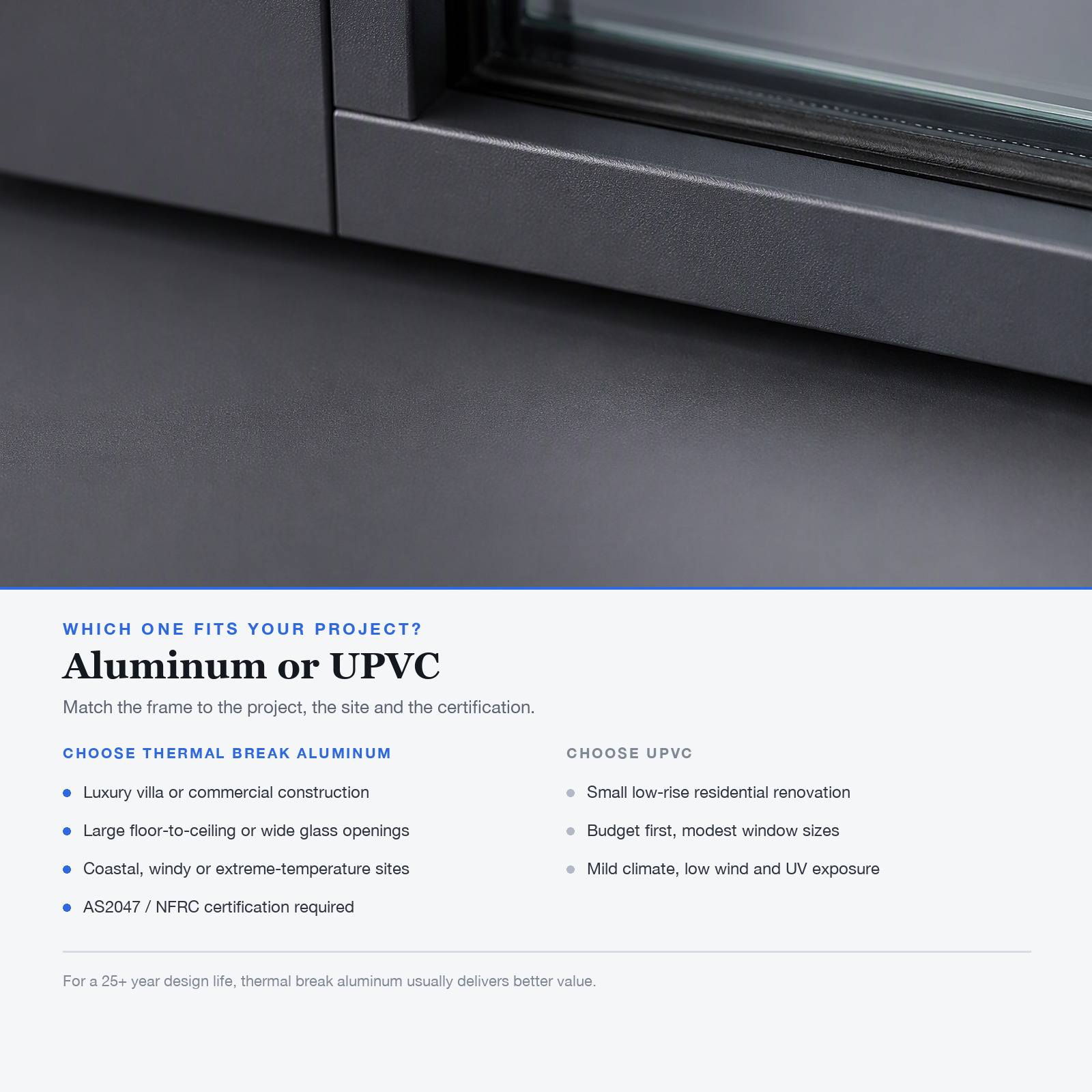
6. Which One Should You Choose?
Pick Thermal Break Aluminum Windows if:
- You are working on luxury villa projects or commercial constructions
- Large, floor-to-ceiling windows or wide glass openings are required
- The site is coastal, windy, or has extreme temperature swings
- Projects need AS2047 / NFRC certification for Australia or North America
- You want long-lasting structural stability and consistent aesthetics
Pick UPVC Windows if:
- Small-scale low-rise residential renovation
- Budget is the top priority, window sizes are modest
- Mild climate without strong wind or intense continuous UV exposure
Conclusion
When comparing thermal break aluminum windows vs UPVC windows, there is no universal “better” option — the decision depends on project type, location, size requirements and long-term goals.
UPVC works well for simple small residential projects with tight budgets. But for villas and commercial projects targeting Australian and North American markets, thermal break aluminum system windows stand out with superior wind resistance, long service life, flexible custom sizing and reliable AS2047 / NFRC compliance. Our factory designs and manufactures high-performance thermal break aluminum windows optimized for overseas projects, with full test documentation ready for your tender and procurement.
FAQ
Q1: Are thermal break aluminum windows more energy efficient than UPVC?
A1: With premium polyamide thermal breaks and Low-E argon-filled glass, thermal break aluminum windows can match or exceed the thermal performance of UPVC windows, especially for large openings.
Q2: Can thermal break aluminum windows pass AS2047 certification?
A2: Yes. Our thermal break aluminum window systems have completed AS2047 testing for Australian market applications, including air, water and structural performance.
Q3: Which option is better for coastal villa projects?
A3: Thermal break aluminum with high-quality powder coating is recommended. It resists salt spray corrosion and high wind loads far better than UPVC in coastal areas.
Q4: What is the main downside of UPVC commercial windows?
A4: UPVC frames have structural limits. Large units may sag over time, and long-term UV exposure can cause colour fading, which is not ideal for commercial building facades.
Company store:https://zcsung.en.alibaba.com/