 EN

Title: Thermal Break Aluminum Windows vs Non-Thermal Break Aluminum Windows: What’s the Difference
Meta Description: Compare thermal break aluminum windows and regular aluminum windows on thermal performance, condensation, air tightness, cost and applications. Find out why thermal break aluminum is preferred for US residential and villa projects with NFRC, IGCC & SGCC certified glass from ZCSUNG. Target Keywords: thermal break aluminum vs regular aluminum windows, thermal break aluminum window, non thermal break aluminum window, aluminum window condensation, energy efficient aluminum windows
Thermal Break Aluminum Windows vs Non-Thermal Break Aluminum Windows: What’s the Difference
When sourcing aluminum fenestration for US villas, homes and commercial builds, one of the most frequent questions buyers ask is about thermal break aluminum vs regular aluminum windows. Thermal break aluminum vs regular aluminum windows look nearly identical from the exterior, but thermal break aluminum vs regular aluminum windows deliver massive gaps in energy efficiency, condensation control and year-round comfort. Many contractors and homeowners mistakenly assume all aluminum windows perform alike, yet understanding thermal break aluminum vs regular aluminum windows is critical before locking in your window specification. ZCSUNG supplies premium thermal break aluminum window systems paired with IGCC and SGCC certified insulated glass, compliant with NFRC and AAMA standards, and today we break down thermal break aluminum vs regular aluminum windows across structure, U-factor, condensation, sealing, cost and best-fit scenarios.
Aluminum windows are popular across North America for their strength, slim sightlines, durability and low-maintenance finish. But many buyers and contractors get confused by two main types: thermal break aluminum windows and regular (non-thermal break) aluminum windows. They look almost identical from the outside, yet their performance gap is huge, especially on heat transfer, condensation and energy consumption. This guide covers the core differences between thermal break aluminum vs regular aluminum windows, standard ratings, suitable scenarios and sourcing tips for your residential, villa and commercial projects. ZCSUNG supplies thermal break aluminum window systems paired with IGCC and SGCC certified insulated glass, compliant with NFRC and AAMA standards.
1. Core Structure Difference (The Thermal Break Strip)
This is the fundamental distinction when evaluating thermal break aluminum vs regular aluminum windows.
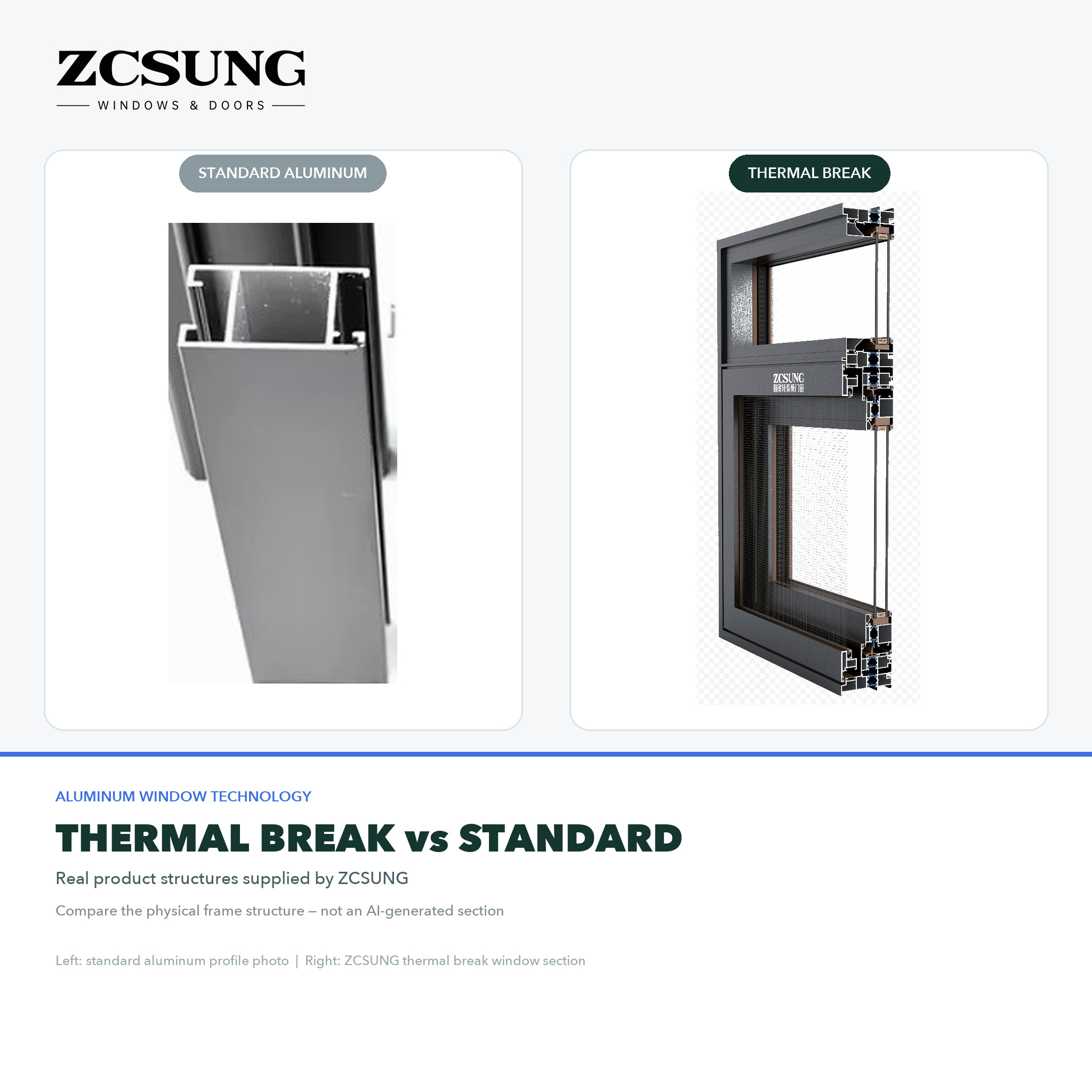
- Non-thermal break aluminum window (regular aluminum) The frame is a single continuous aluminum extrusion. Aluminum is an excellent heat conductor. Heat can flow directly through the whole metal frame with no barrier. There is no polyamide thermal break strip inserted inside the profile. This single-piece metal design is the biggest limitation of a non thermal break aluminum window, no matter what glass you install.
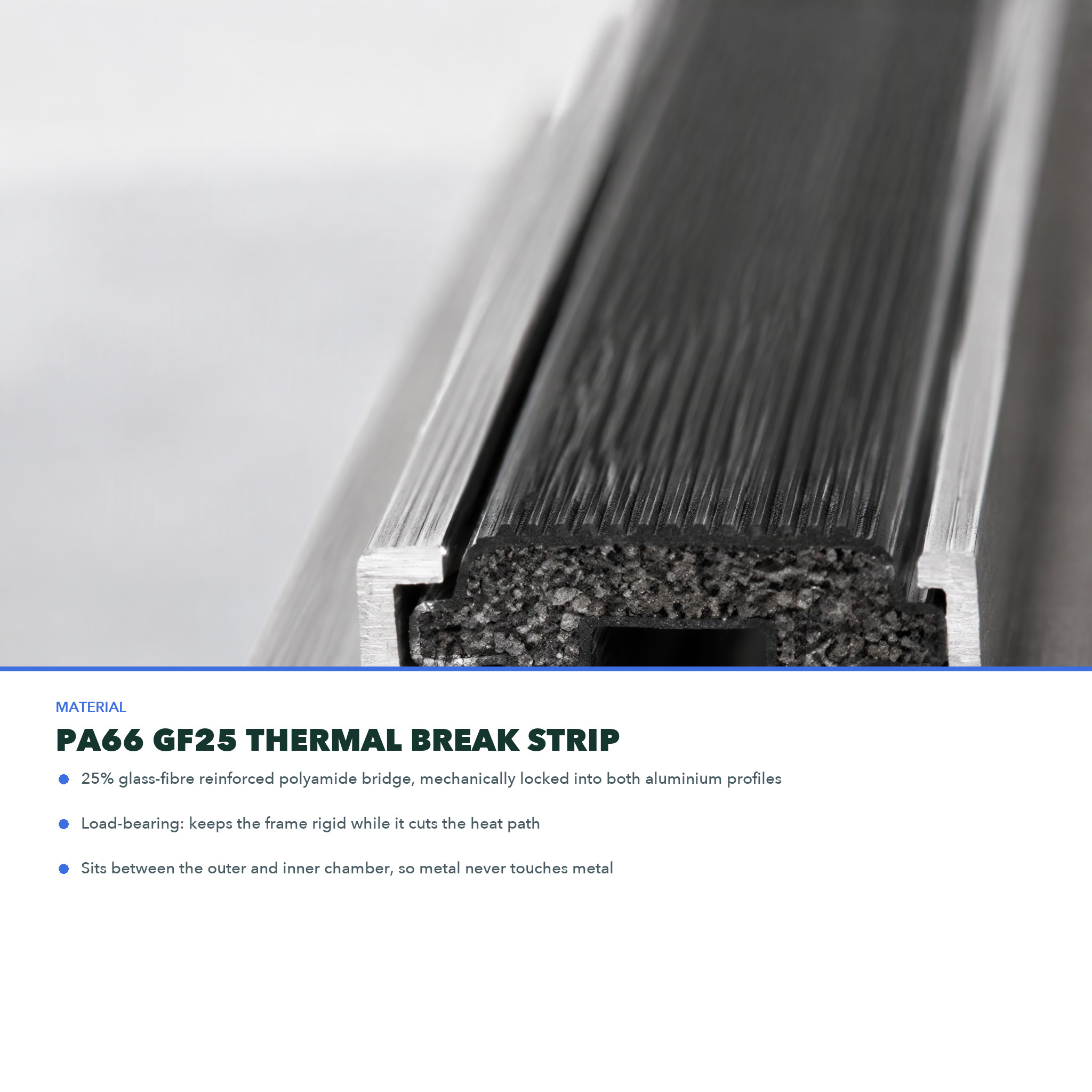
- Thermal break aluminum window The aluminum profile is split into interior and exterior two parts, connected by rigid polyamide nylon thermal break strips (PA66 GF25). The nylon strip has low thermal conductivity, cutting off the thermal bridge between outside and inside. When reviewing thermal break aluminum vs regular aluminum windows, always check whether the profile includes this PA66 GF25 thermal break strip. Without this isolation strip, aluminum frame becomes a fast channel for heat gain and heat loss, which is the main downside of a non thermal break aluminum window — no matter if you upgrade to double pane or triple pane insulated glass.
2. Thermal Insulation Performance (U-factor)
Thermal performance is measured by whole-window U-factor (NFRC standard, Btu/h·ft²·°F). Lower U-value = better insulation. This metric is where thermal break aluminum vs regular aluminum windows show the clearest performance gap.
- Regular aluminum + double insulated glass: Uw ≈ 0.85 – 1.4
- Thermal break aluminum + double Low-E argon insulated glass (IGCC/SGCC glass): Uw ≈ 0.30 – 0.50
- High-end thermal break aluminum + triple Low-E argon glass: Uw down to 0.18 – 0.25
A non thermal break aluminum window cannot fully take advantage of high-performance insulated glass. The aluminum frame itself keeps transferring heat, which raises energy bills for cooling and heating. If energy efficiency is your priority, thermal break aluminum vs regular aluminum windows is an easy call: pick thermal break aluminum window. ZCSUNG energy efficient aluminum windows are engineered around this thermal break principle to keep U-factor low across all climate zones in the United States.
3. Condensation Resistance
Aluminum window condensation is one of the top complaints from homeowners who installed budget non thermal break aluminum window units. Comparing thermal break aluminum vs regular aluminum windows, condensation risk separates these two products dramatically, especially in cold seasons or high-humidity coastal areas.
- Non-thermal break aluminum: The inner frame surface easily drops to dew point temperature. Fog, water droplets and even mold often appear along the frame edge. Aluminum window condensation is extremely common on single-piece aluminum frames.
- Thermal break aluminum: The inner frame stays much closer to indoor air temperature. It greatly reduces condensation risk and improves condensation resistance (CR rating).
Important note: Thermal break design reduces condensation, but cannot eliminate it completely if indoor humidity is extremely high or ventilation is poor. Still, if you struggle with aluminum window condensation, switching from a non thermal break aluminum window to a quality thermal break aluminum window is the most effective upgrade.

4. Air Tightness & Water Tightness
Both window types can adopt EPDM gaskets, multi-point locks and drainage cavities, but system design standards differ widely when you compare thermal break aluminum vs regular aluminum windows.
- Regular aluminum: Air and water sealing level depends on gasket and hardware only. It can reach basic residential AAMA R grade, but the condensation issue still exists. Most non thermal break aluminum window builds are simple, not engineered as full system fenestration.
- Thermal break aluminum system windows: Most are designed as full system fenestration. Manufacturers usually match multi-layer EPDM seals, vulcanized corner joints and optimized pressure-equalization drainage. Premium thermal break casement windows can reach AAMA AW grade for coastal and high-rise projects.
Sliding styles of both types have naturally weaker air tightness than casement and tilt-turn versions. When comparing thermal break aluminum vs regular aluminum windows for rainy, windy coastal locations, a high-grade thermal break aluminum window is always the safer option.
5. Service Life & Surface Finish
- Both can use AAMA 2604 / 2605 powder coating for anti-corrosion and UV resistance.
- Regular aluminum: Simple structure, fewer internal components. If the coating stays intact, frame lifespan is long, but thermal performance never improves. A non thermal break aluminum window will always transfer heat quickly for its whole service life.
- Thermal break aluminum: The PA66 thermal strip is engineered for long-term stability. Quality thermal break systems won’t delaminate under normal temperature cycles. Cheap inferior thermal strips may soften or separate after years of sun exposure.
ZCSUNG only uses PA66 GF25 nylon strips and strictly controls crimping process to avoid separation failure. When you source thermal break aluminum vs regular aluminum windows, always verify the thermal strip material, not only the powder coating finish.
6. Cost Comparison
- Regular aluminum window: Lower material cost, simple fabrication, budget-friendly option. A non thermal break aluminum window is cheaper upfront.
- Thermal break aluminum window: Higher raw material and processing cost. It requires precise profile cutting, strip crimping and system testing. Final unit price is obviously higher.
The extra cost brings long-term ROI: lower HVAC running cost, less aluminum window condensation maintenance and better indoor comfort. For most permanent residential projects, thermal break aluminum vs regular aluminum windows delivers a strong return on investment over the window’s service life. Our ZCSUNG energy efficient aluminum windows are popular among villa builders who prioritize long-term savings over lowest initial price.
7. Best Suitable Application Scenarios
✅ Choose regular non-thermal break aluminum windows if:
- Dry, mild climate with small temperature difference between day and night
- Auxiliary buildings, storage rooms, covered patio openings
- Projects with tight budget and low energy-efficiency requirements
- Areas where aluminum window condensation and energy saving are not key concerns
✅ Choose thermal break aluminum window if:
- Cold winter zones, hot-summer zones, high humidity and coastal locations
- Villa, luxury residential, rental properties and commercial buildings
- Projects requiring NFRC energy code compliance
- Street-side homes expecting better overall thermal comfort
- You are using Low-E / argon filled insulated glass (IGCC & SGCC certified)
If you are still deciding thermal break aluminum vs regular aluminum windows, map your local climate and energy code first. Cold or hot climate zones almost always require thermal break aluminum window solutions.
Quick Comparison Table
| Item | Non-Thermal Break Aluminum Windows | Thermal Break Aluminum Windows |
|---|---|---|
| Core structure | One-piece aluminum profile | Split aluminum + PA66 nylon thermal break strip |
| Whole window U-factor | High (0.85–1.4) | Low (0.18–0.50) |
| Condensation risk | High, frequent aluminum window condensation | Greatly reduced |
| Energy saving | Poor | Excellent, energy efficient aluminum windows |
| Air & water performance | Basic R grade possible | Up to high-performance AW grade |
| Unit price | Lower | Higher |
| Best use | Mild climate, low-budget auxiliary space | Villa, residential, commercial, extreme climate zones |

Common Misconceptions
- “If I use double insulated glass, regular aluminum is just as good.” False. The aluminum frame is still a thermal bridge. Frame heat transfer accounts for a large share of total heat loss. This is the #1 mistake buyers make when comparing thermal break aluminum vs regular aluminum windows.
- “Thermal break aluminum means fully waterproof.” False. Water tightness relies on drainage cavity, gaskets and correct installation flashing. Thermal break solves heat transfer, it is not a waterproof feature.
- “All thermal break strips are the same.” False. Low-cost PVC strips will deform and fail. Qualified windows use PA66 GF25 glass-filled nylon strips. Cheap thermal break aluminum window products cut corners here to match the price of a non thermal break aluminum window.
FAQ
Q: Does thermal break aluminum block noise better?
A: Thermal break mainly targets heat transfer. Sound insulation mostly depends on glass thickness, air gap and sealing. But good multi-seal thermal break systems usually perform better on soundproofing than basic regular aluminum windows. When comparing thermal break aluminum vs regular aluminum windows for noisy street-front homes, the thermal break model with multi-layer seals will deliver quieter indoor space.
Q: Do I need NFRC certification for thermal break aluminum windows?
A: For most US residential projects following local energy codes, NFRC labeled windows are required. ZCSUNG thermal break windows can provide NFRC ratings together with IGCC/SGCC glass certificates. If you are bidding projects, thermal break aluminum vs regular aluminum windows compliance with local energy code is a key specification point.
Q: Can I retrofit regular aluminum windows into thermal break?
A: No. The thermal break is built into the aluminum extrusion structure. Retrofit is not feasible; full window replacement is required. If you have ongoing aluminum window condensation or high energy bills, replacing your non thermal break aluminum window with a certified thermal break aluminum window is the only practical fix.
Final Takeaway
The thermal break strip is the dividing line between ordinary aluminum windows and energy-saving system aluminum windows. Regular aluminum is a low-cost, strong option for simple scenarios. Thermal break aluminum is a complete system solution built for energy codes, condensation control and year-round comfort.
For most US residential and commercial fenestration jobs, thermal break aluminum vs regular aluminum windows is not a hard decision once you review U-factor, aluminum window condensation risk and local energy rules. When sourcing aluminum windows for US villa and commercial projects, ZCSUNG thermal break aluminum windows with IGCC & SGCC certified insulated glass are available for custom sizes, AAMA and NFRC performance requirements. Contact us to get specification sheets and test reports for thermal break aluminum window systems.
https://zcsung.en.alibaba.com/index.html?spm=a2700.shop_plgr.88.9.1f327121bf2nst
Table of Contents
- Title: Thermal Break Aluminum Windows vs Non-Thermal Break Aluminum Windows: What’s the Difference
- Thermal Break Aluminum Windows vs Non-Thermal Break Aluminum Windows: What’s the Difference
- 1. Core Structure Difference (The Thermal Break Strip)
- 2. Thermal Insulation Performance (U-factor)
- 3. Condensation Resistance
- 4. Air Tightness & Water Tightness
- 5. Service Life & Surface Finish
- 6. Cost Comparison
- 7. Best Suitable Application Scenarios
- Quick Comparison Table
- Common Misconceptions
- FAQ
- Final Takeaway