 EN

Aluminum windows are widely selected for North American homes, villas and commercial buildings for high strength, long service life and slim aesthetic. However, plain aluminum is highly thermally conductive. Without proper system design, windows become the main weak point for heat loss, cold drafts and rain leakage. Three core performance metrics decide the real value of aluminum windows: thermal insulation, air tightness and water tightness.
In this guide, we break down what each performance means, standard test criteria, influencing factors and practical selection tips for your next residential or commercial project. ZCSUNG thermal break aluminum window systems, tested and certified with IGCC and SGCC glass, are built to meet strict NFRC and AAMA requirements across climate zones.
1. Thermal Insulation (U-Factor / U-value)
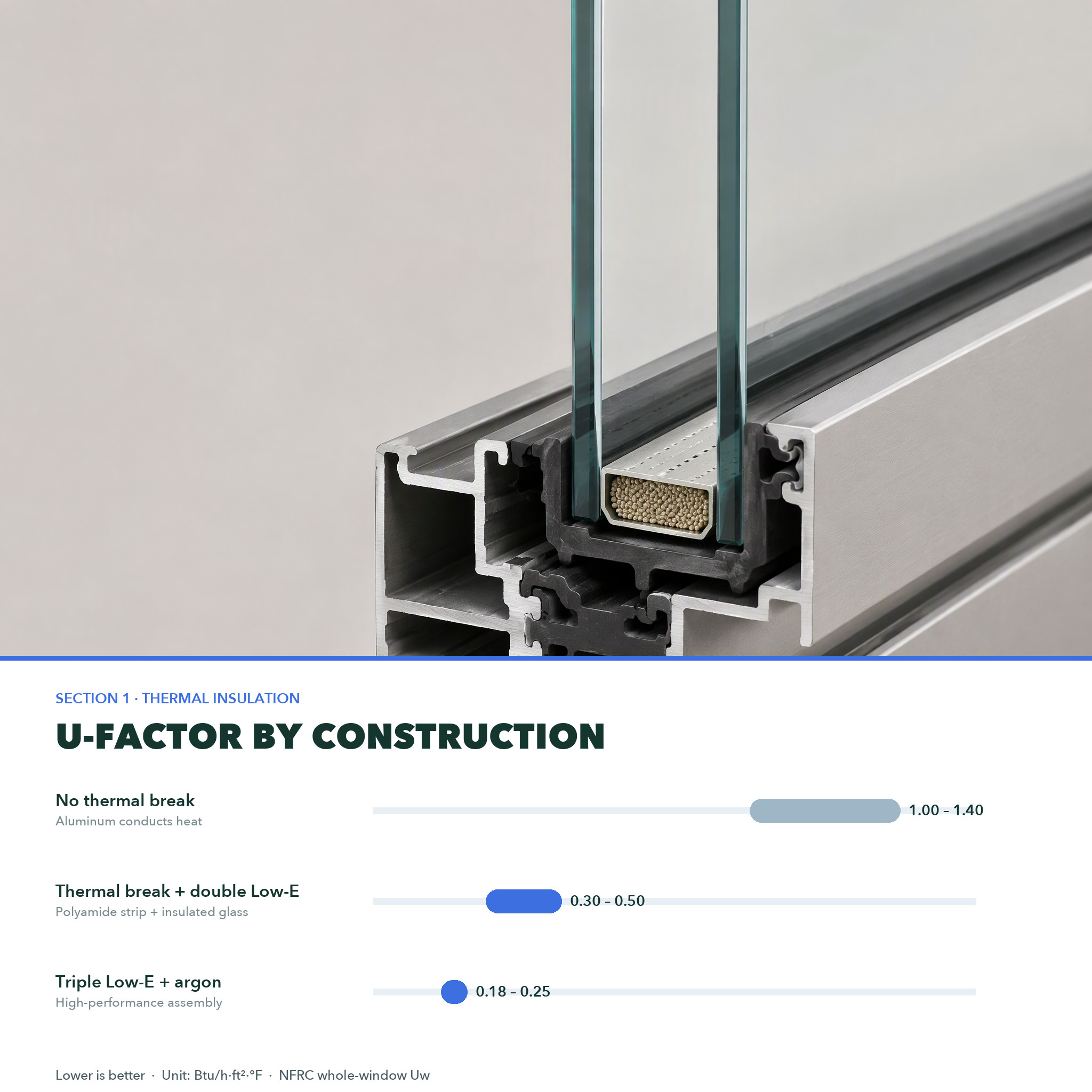
Thermal insulation describes how easily heat transfers through the whole window assembly (frame + glass + seal). It is measured by U-factor (Uw, whole window U-value). A lower U-factor means better thermal insulation, less heat loss in winter and less heat gain in summer, cutting HVAC bills and reducing interior condensation risk.
Standard reference (US NFRC):
- U-factor unit: Btu/h·ft²·°F
- Entry-level non-thermal-break aluminum: U-factor ~1.0–1.4
- Standard thermal break aluminum + double Low-E insulated glass: U-factor ~0.30–0.50
- High-performance triple pane Low-E + argon fill: U-factor down to 0.18–0.25
How ZCSUNG achieves low U-factor:
- Polyamide nylon thermal break strips to cut thermal bridge on aluminum frames
- IGCC & SGCC certified insulated glass, Low-E coating and argon gas filling
- Optimized multi-cavity profile structure, matched warm-edge spacers
- Full system simulation and NFRC performance testing
Tip: Do not only check glass center U-value. Always confirm the whole-window Uw rating, as aluminum frame thermal bridging often dominates heat transfer.
2. Air Tightness (Air Leakage, AL)
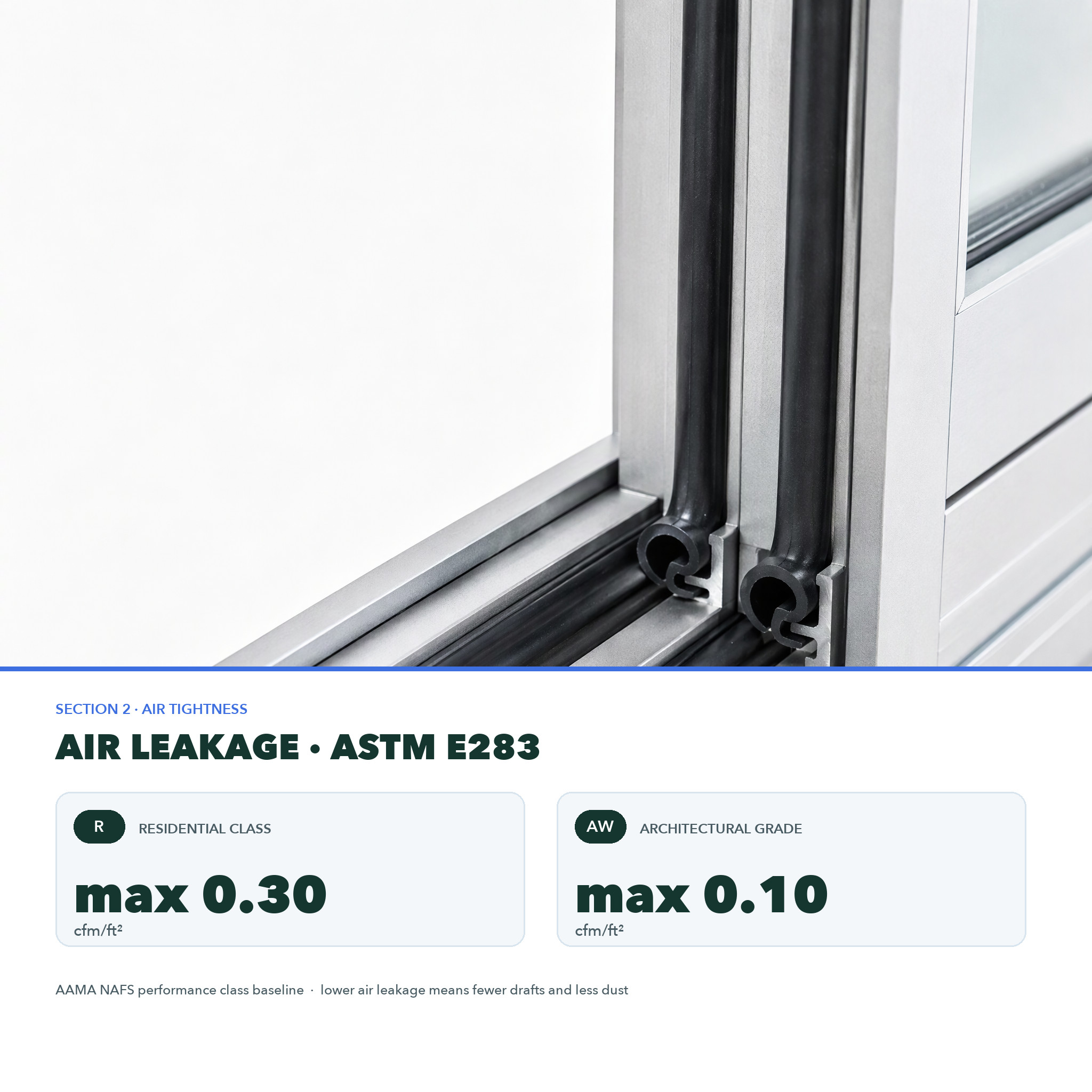
Air tightness measures uncontrolled air infiltration through gaps between sash, frame, joints and hardware, tested under fixed pressure difference (AAMA ASTM E283). The index is air leakage rate, unit: cfm/ft². Lower air leakage = better airtightness, fewer drafts, less dust, lower energy consumption and quieter indoor space.
AAMA NAFS classification baseline:
- General residential R class: max 0.30 cfm/ft²
- High-performance AW architectural grade: ≤0.10 cfm/ft²
Main leakage points on aluminum windows:
- Corner joint gaps
- Gasket aging or discontinuous sealing
- Poor fit of sliding sash
- Low-grade hardware with incomplete compression
ZCSUNG airtight design:
- Multi-layer EPDM gaskets (3-seal structure preferred for casement windows)
- Vulcanized sealed corners to eliminate joint gaps
- Multi-point locking hardware, full perimeter compression when closed
- Tilt & turn and casement styles outperform sliding windows in air tightness
3. Water Tightness (Water Infiltration Resistance)
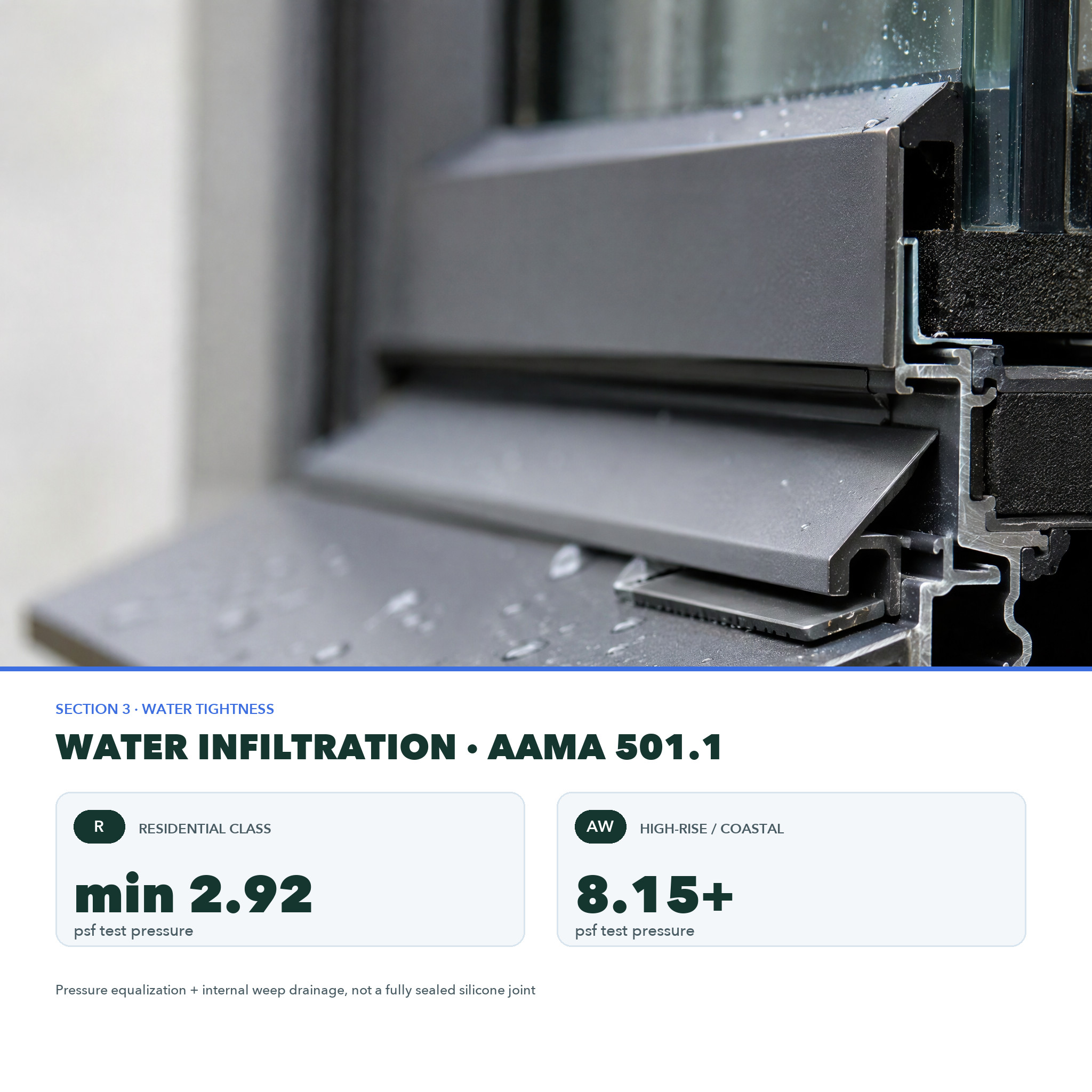
Water tightness is the ability to resist rain penetration under wind-driven rain pressure, tested per AAMA 501.1 / ASTM E331. It is rated by the test pressure (psf or Pa) before sustained leakage occurs.
A common misunderstanding: a good watertight window is not “sealed completely”. Professional aluminum window systems adopt pressure equalization + internal weep drainage: wind pressure balances inside the cavity, incidental water is captured and drained out through weep holes instead of being blocked by silicone only.
AAMA grade reference:
- R residential: minimum 2.92 psf
- AW high-rise / coastal storm zone: 8.15 psf and above
Critical design details:
- Sloped sill with hidden weep channels and baffle covers
- Separated drainage cavity, prevent capillary water backflow
- Continuous gasket without cuts at corners
- Proper flashing installation on site (even top-rated windows leak with bad flashing)
For coastal, rainy and hurricane-prone US zones, specify AW-class water tightness rather than basic residential grade.
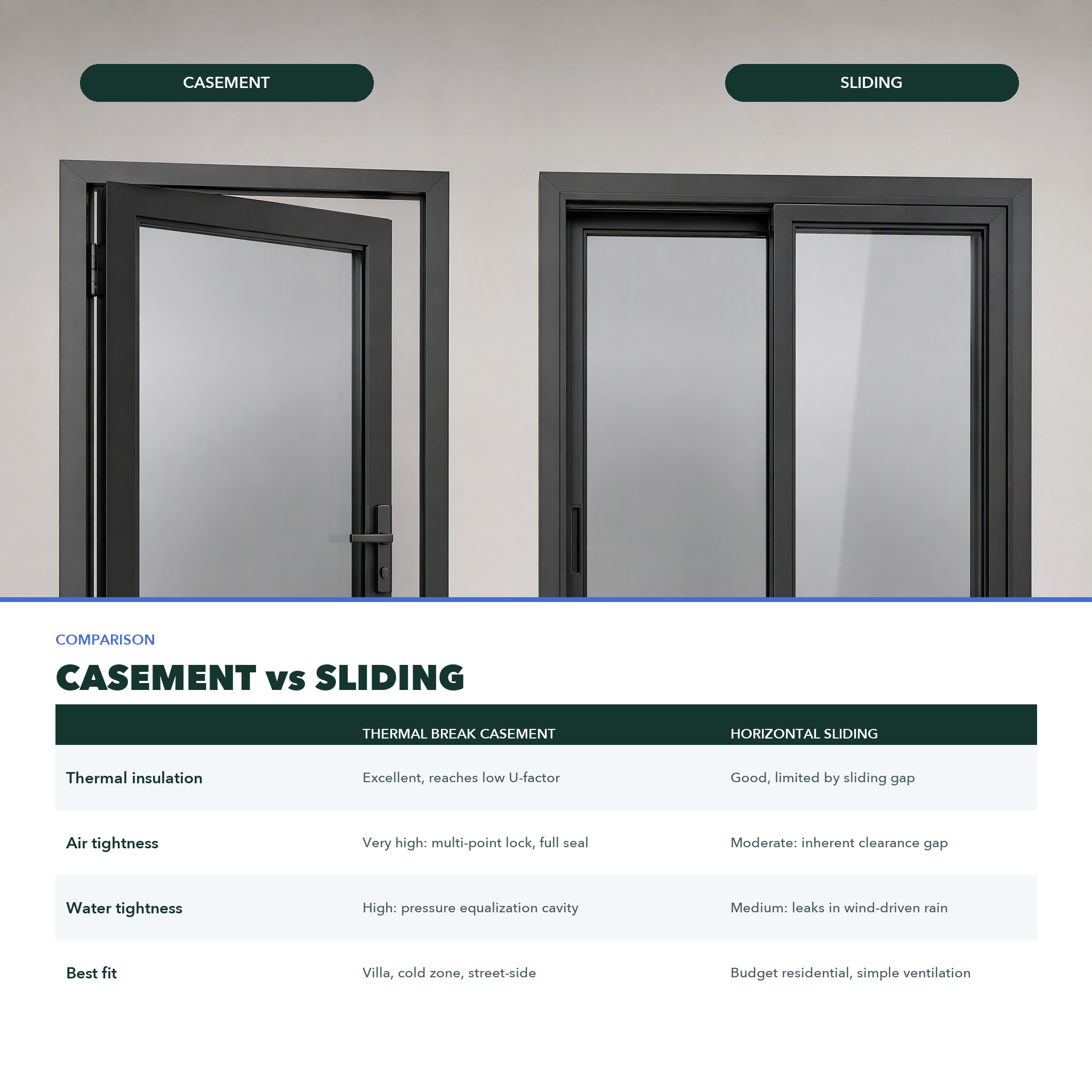
Comparison: Casement vs Sliding Aluminum Windows
| Performance | Thermal Break Casement / Tilt & Turn | Horizontal Sliding Aluminum Window |
|---|---|---|
| Thermal Insulation | Excellent, can reach low U-factor | Good, limited by sliding gap |
| Air Tightness | Very high (multi-point lock + full perimeter seal) | Moderate, inherent sliding clearance gap |
| Water Tightness | High, pressure equalization cavity | Medium, easier to leak in heavy wind-rain |
| Best Fit | Villa, cold zone, street-side, high energy requirement | Budget residential, simple ventilation demand |
What Certifications You Should Request
When sourcing aluminum windows for US projects, verify these documents:
- NFRC label: U-factor, SHGC, air leakage, condensation resistance CR
- AAMA NAFS performance class (R / LC / CW / AW)
- IGCC & SGCC certification for tempered insulated glass
- AAMA 2604 / 2605 coating finish for coastal salt resistance
ZCSUNG provides full test reports and certified glass for easy project approval in US states.
Common Failure Causes in Real Projects
- Spec only glass performance, ignore frame thermal break and whole-window assembly rating
- Use PVC gaskets instead of UV-resistant EPDM; gaskets harden and leak after 2–3 years
- Poor corner assembly, only silicone sealed instead of vulcanized joint
- Incorrect flashing, blocked weep holes during installation
- Choose sliding windows for high-wind, heavy rain coastal projects
FAQ
Q: Can thermal break aluminum windows stop condensation?
A: Great thermal insulation and high CR (condensation resistance) reduce condensation risk, but 100% no condensation also depends on indoor humidity and ventilation.
Q: Which window type balances 3 performances best?
A: Thermal break casement and tilt-turn windows deliver the best combination of U-factor, air tightness and water tightness for most US villa and high-end commercial projects.
Q: Is IGCC glass certification related to these three performances?
A: Yes. IGCC/SGCC certified insulated glass ensures stable airtightness inside the glass unit, prevents gas escape and fogging, maintaining long-term thermal performance.
Final Takeaway
Thermal insulation, air tightness and water tightness are three linked pillars for aluminum window quality. A high-performance window is not only about thick aluminum profile or Low-E glass; it is a complete system including thermal break structure, sealing layout, drainage design, hardware, certified glass and correct installation.
If you are sourcing aluminum windows for US residential, villa or mid-rise commercial projects, ZCSUNG thermal break aluminum windows with IGCC & SGCC glass certification can be customized to meet your AAMA and NFRC specification requirements. Contact our team to get performance datasheets and test reports.