 EN

Introduction
When renovating or building residential properties across the United States, window selection directly impacts curb appeal, energy bills, storm resistance and indoor comfort. Thermal break aluminum windows have gained huge traction over wood and vinyl in recent years, thanks to slim sightlines, long service life, custom color finishes and compliance with US building codes.
American homeowners and contractors prefer specific window operating styles, not all European window types fit local habits. Today we break down the most widely used aluminum window types for US residential projects, explain their pros, cons, ideal room placement, and matching glass solutions.
All our ZCSUNG aluminum window systems support IGCC and SGCC certified tempered insulated glass, Low‑E coating, argon gas fill, and NFRC rating labeling, ready for new construction and window replacement across California, Texas, Florida, the Northeast and Midwest climate zones.
1. Double-Hung Aluminum Windows
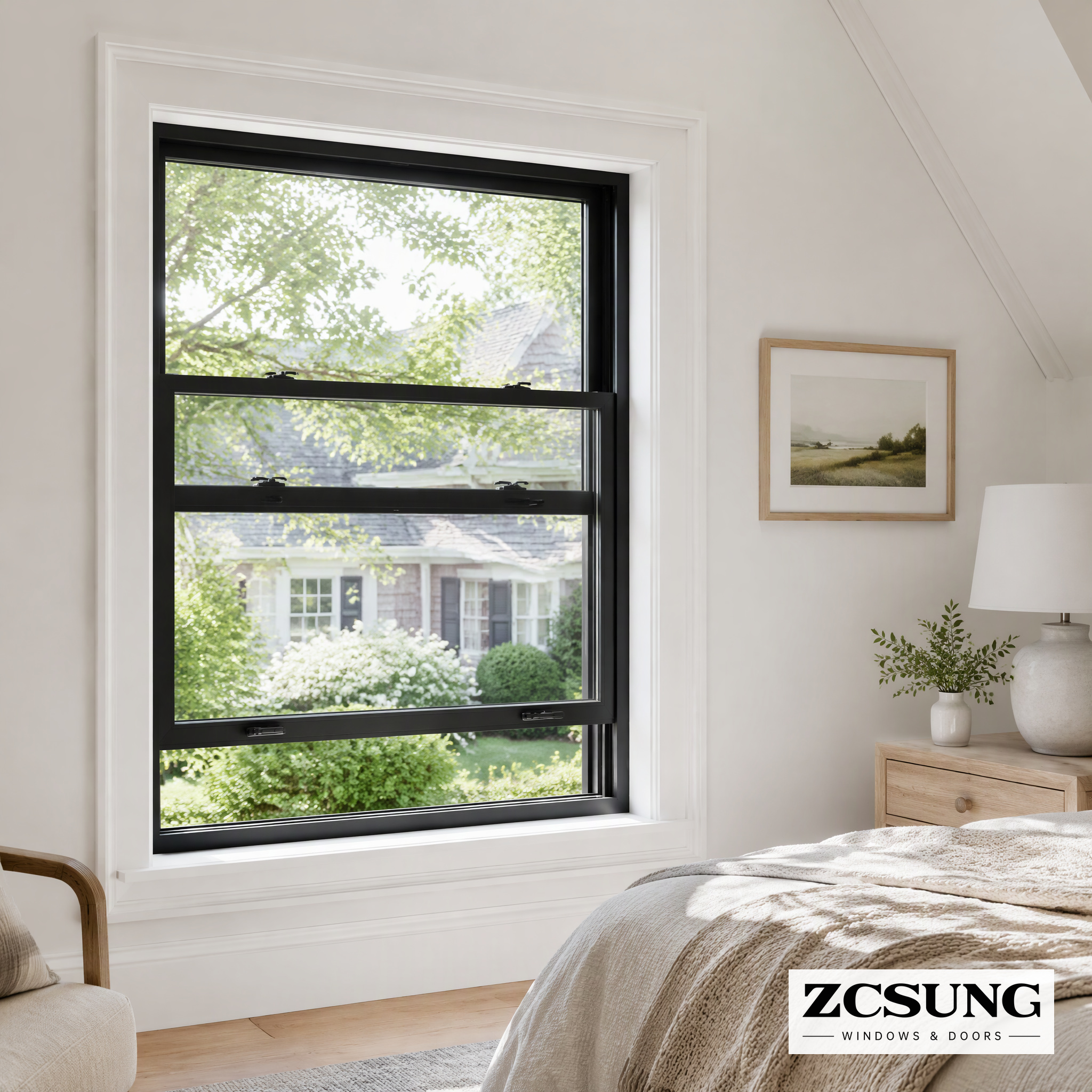
Double-hung windows are the #1 classic window style in American residential architecture, widely seen on Cape Cod, farmhouse, colonial and traditional ranch homes. It features two operable vertical sashes; both upper and lower sashes slide up and down independently. Most modern versions come with tilt-in sashes for easy exterior cleaning from inside the house.
- ✅ Pros: Matches traditional US home aesthetics; flexible top & bottom ventilation; easy to replace old wooden double-hung units; compatible with storm screens
- ❌ Cons: Air sealing is generally weaker than casement windows; maximum opening area limited
- Best for: Bedrooms, living rooms, front facades, whole-house replacement
- Climate note: Pick thermal break frames + IGCC insulated glass for cold northern states and hot southern zones.
2. Single-Hung Aluminum Windows
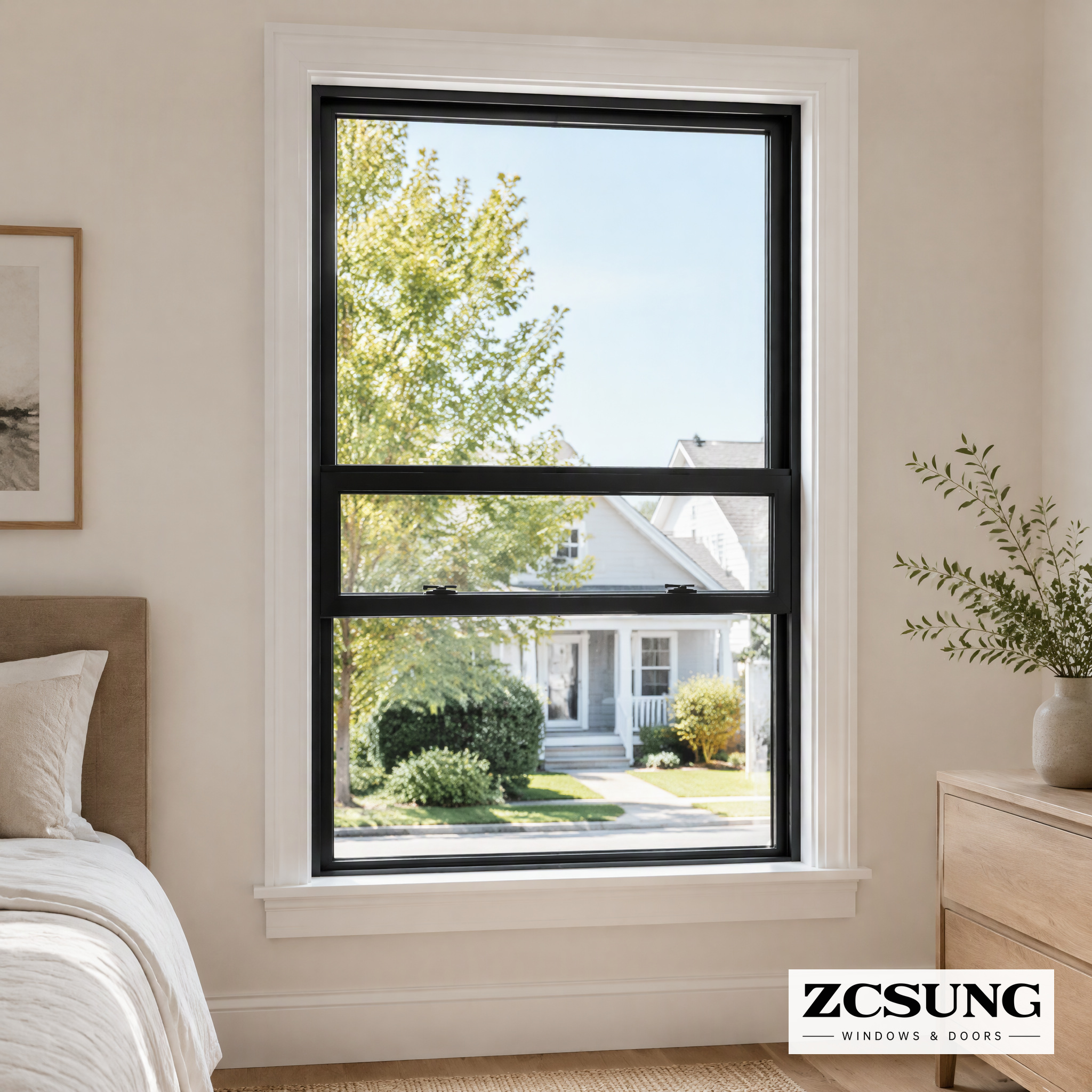
Single-hung aluminum windows look nearly identical to double-hung, but only the bottom sash moves vertically while the top sash stays fixed. This simpler structure brings a lower price point.
- ✅ Pros: Budget-friendly; same classic American look; fewer moving parts = less maintenance
- ❌ Cons: Only lower section opens; no tilt-clean function on upper sash in basic models
- Best for: Rental properties, side windows, basement windows, budget replacement jobs
3. Casement Aluminum Windows
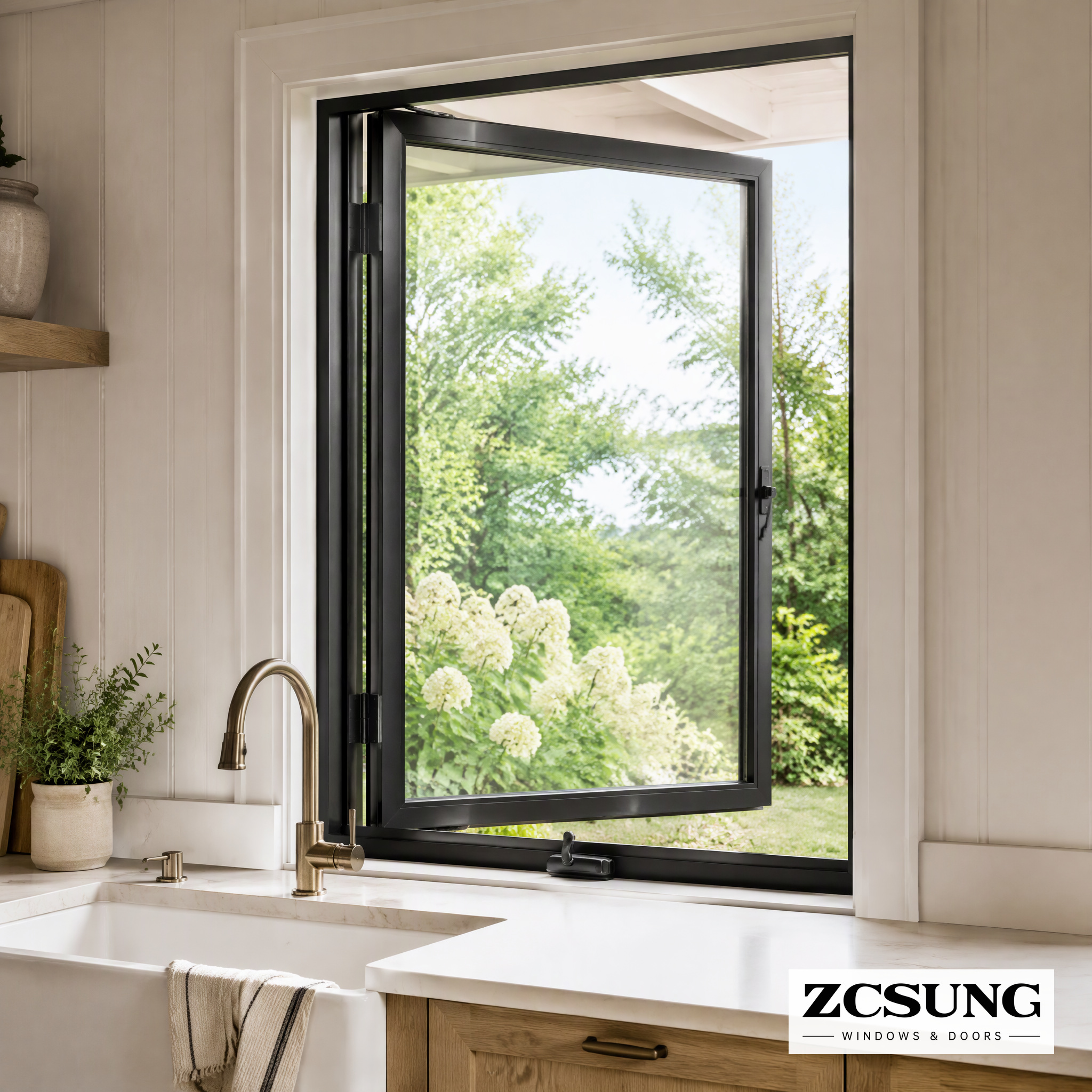
Casement windows are side-hinged, operated by a crank handle and swing fully outward. They create a full unobstructed opening and excellent airtightness when latched closed. For energy efficiency, casement style ranks top among operable US window types.
- ✅ Pros: Excellent weather sealing; 100% ventilation opening; great natural cross breeze; slim aluminum profiles suit modern homes
- ❌ Cons: Out-swing sash needs clearance; not suitable near walkways, patios or outdoor decks
- Best for: Kitchens above sinks, bathrooms, hard-to-reach high openings, modern farmhouse & contemporary houses
- Hurricane zone upgrade: Impact-rated casement aluminum windows available for Florida coastal codes.
4. Horizontal Sliding (Gliding) Aluminum Windows
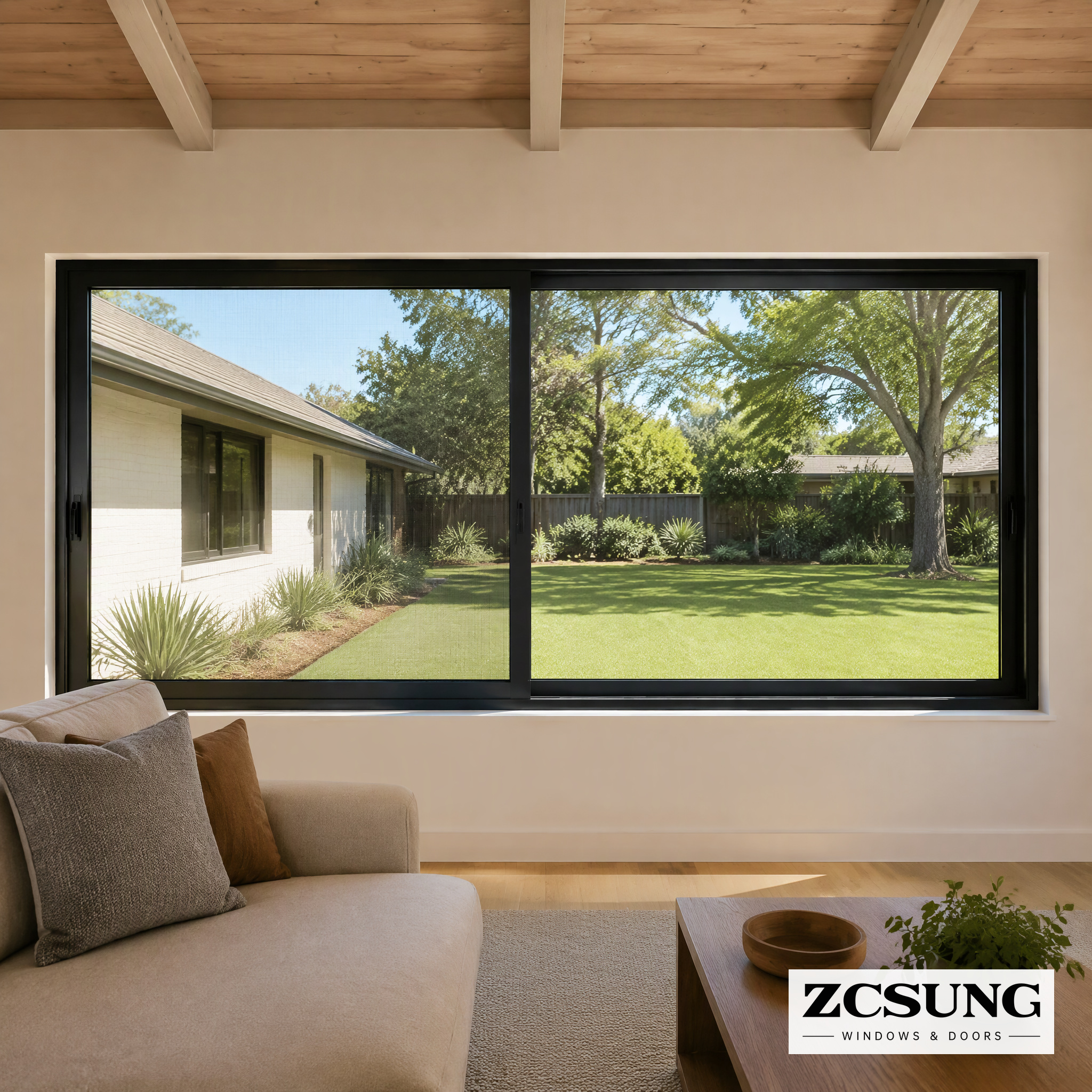
Horizontal sliding windows, also called gliding windows, slide side-to-side along a bottom track. This is the go-to wide-opening style for mid-century modern and ranch-style US homes.
- ✅ Pros: No outward projection; ideal for wide openings; simple operation; low maintenance tracks
- ❌ Cons: Partial opening only; sealing performance below casement
- Best for: Living rooms, basement, patio adjacent walls, long continuous window walls
5. Awning Aluminum Windows
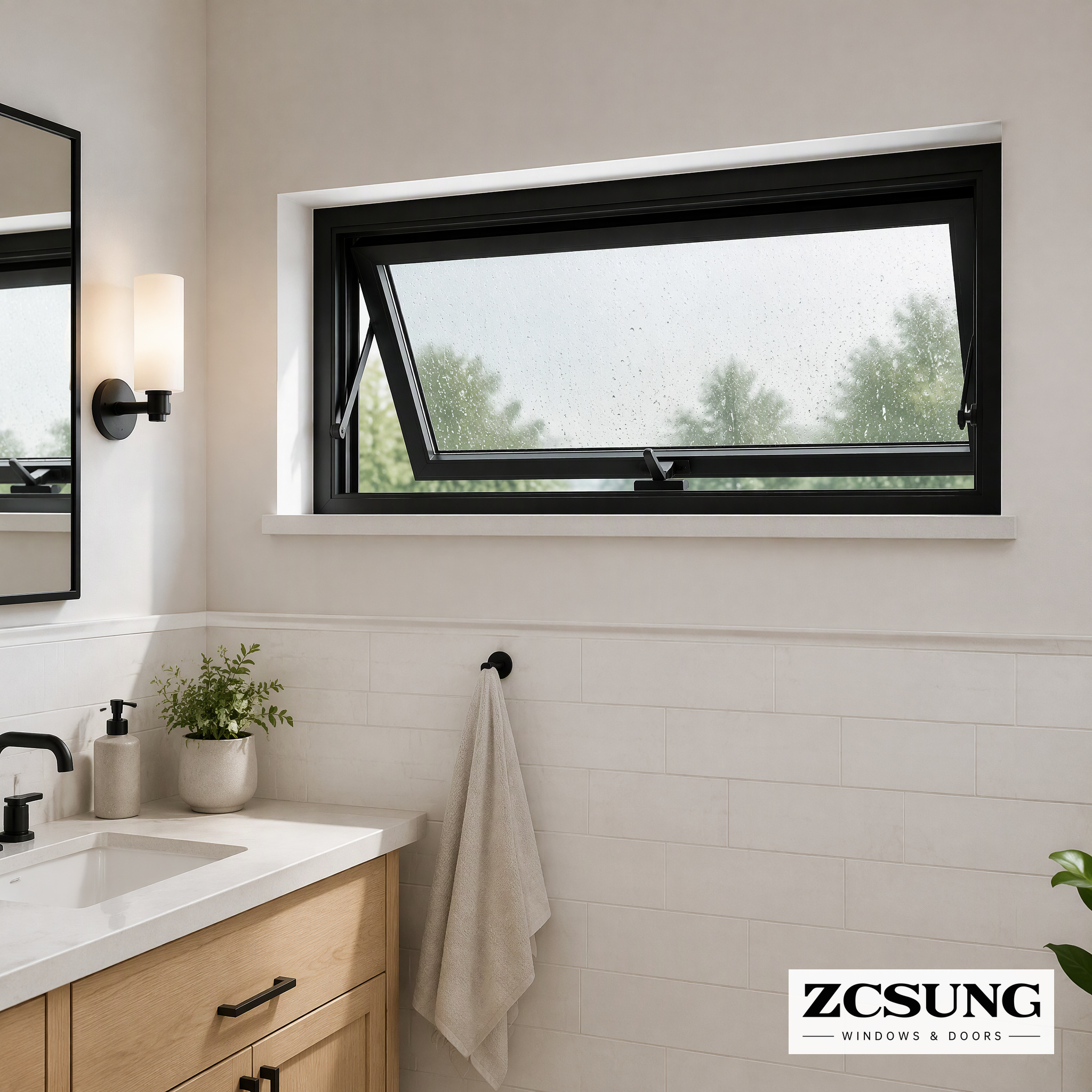
Awning windows are hinged at the top, opening outward from the bottom. Once open, the sash forms a small overhang that blocks light rain from entering the house.
- ✅ Pros: Rain-safe ventilation; high security (hard for intruders to lift open); compact size
- ❌ Cons: Limited airflow volume; small viewing area
- Best for: High placement above picture windows, bathroom privacy windows, basement egress supplementary vents
6. Hopper Aluminum Windows
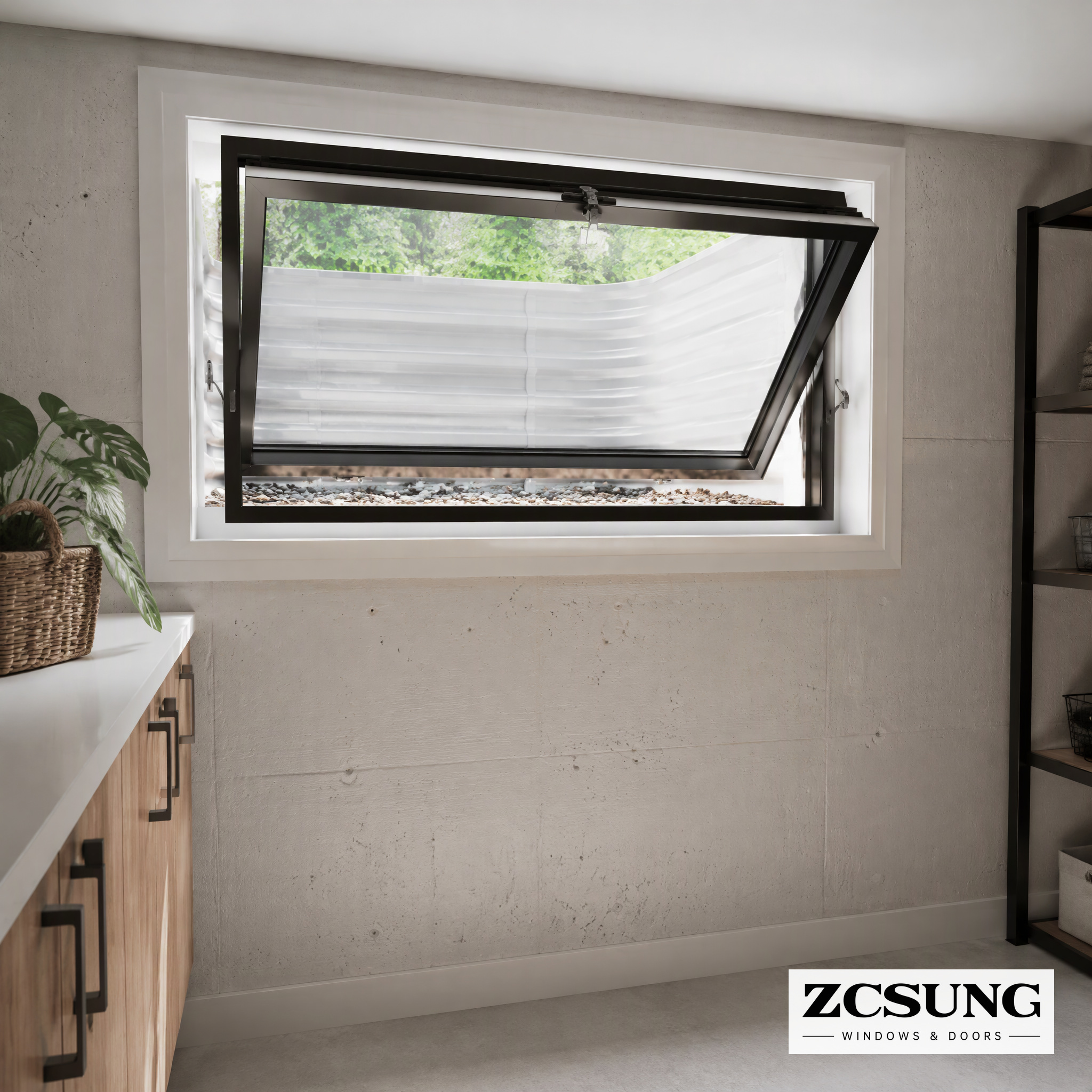
Opposite of awning windows: hopper windows hinge at the bottom and swing inward from the top. They are popular for basement and below-grade spaces in the US.
- ✅ Pros: Easy interior cleaning; inward swing avoids exterior obstacles; good for limited outdoor space
- ❌ Cons: Inward swing occupies indoor space; not the primary style for main floor facades
- Best for: Basements, utility rooms, low foundation openings
7. Fixed Picture Aluminum Windows
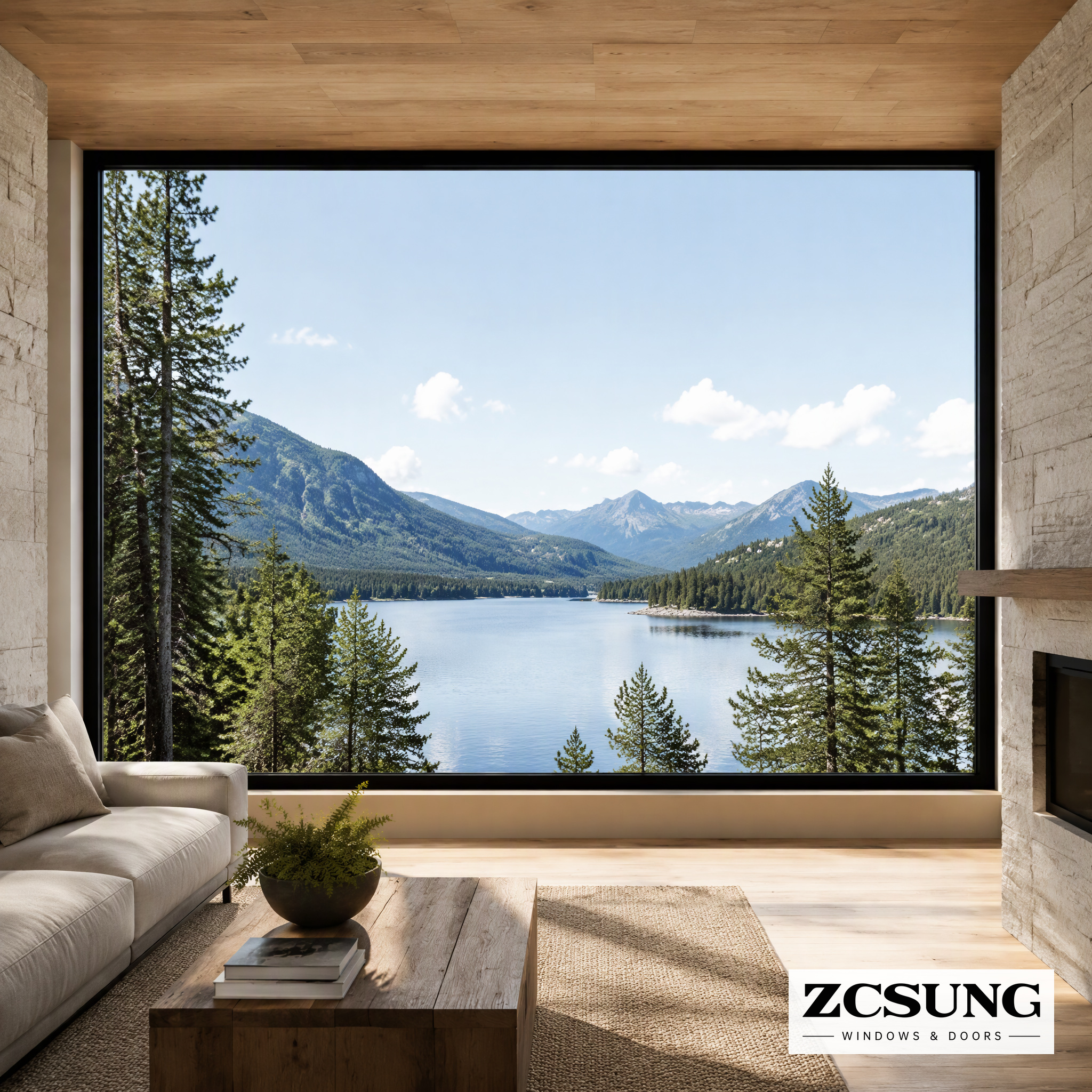
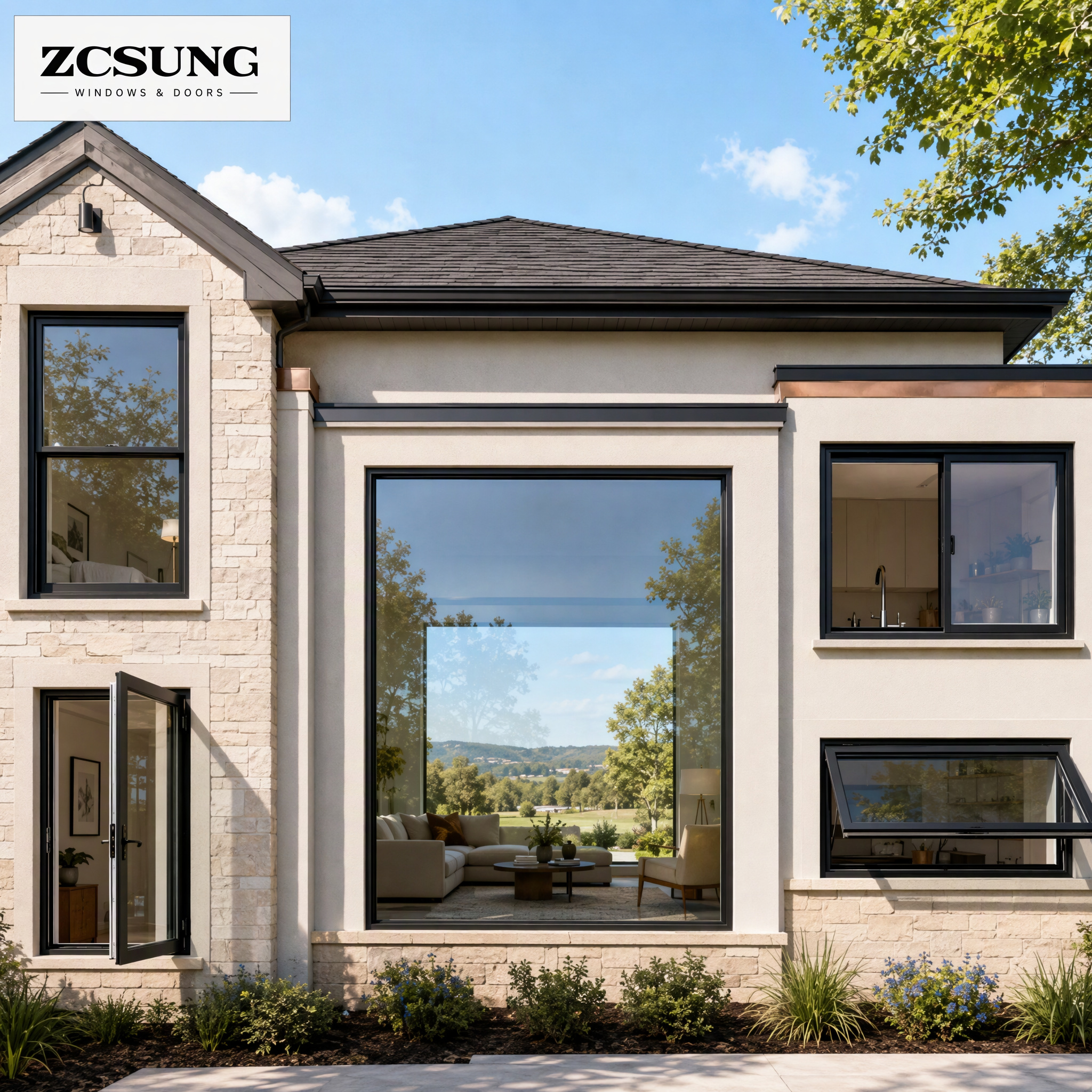
Picture windows are non-operable fixed glass panels with no moving sash. American architects love them for large scenic facades, combined with small casement or awning vents for airflow.
- ✅ Pros: Ultra-wide unbroken views; maximum natural light; best air & water tightness; minimalist slim aluminum frames
- ❌ Cons: No ventilation
- Best for: Living room feature walls, gable windows, lake & mountain view homes, combined window assemblies
- Glass upgrade: IGCC SGCC triple pane Low-E insulated glass for noise control and extreme temperature zones.
8. Bonus: Tilt & Turn Aluminum Windows (Fast-Growing Trend in USA)
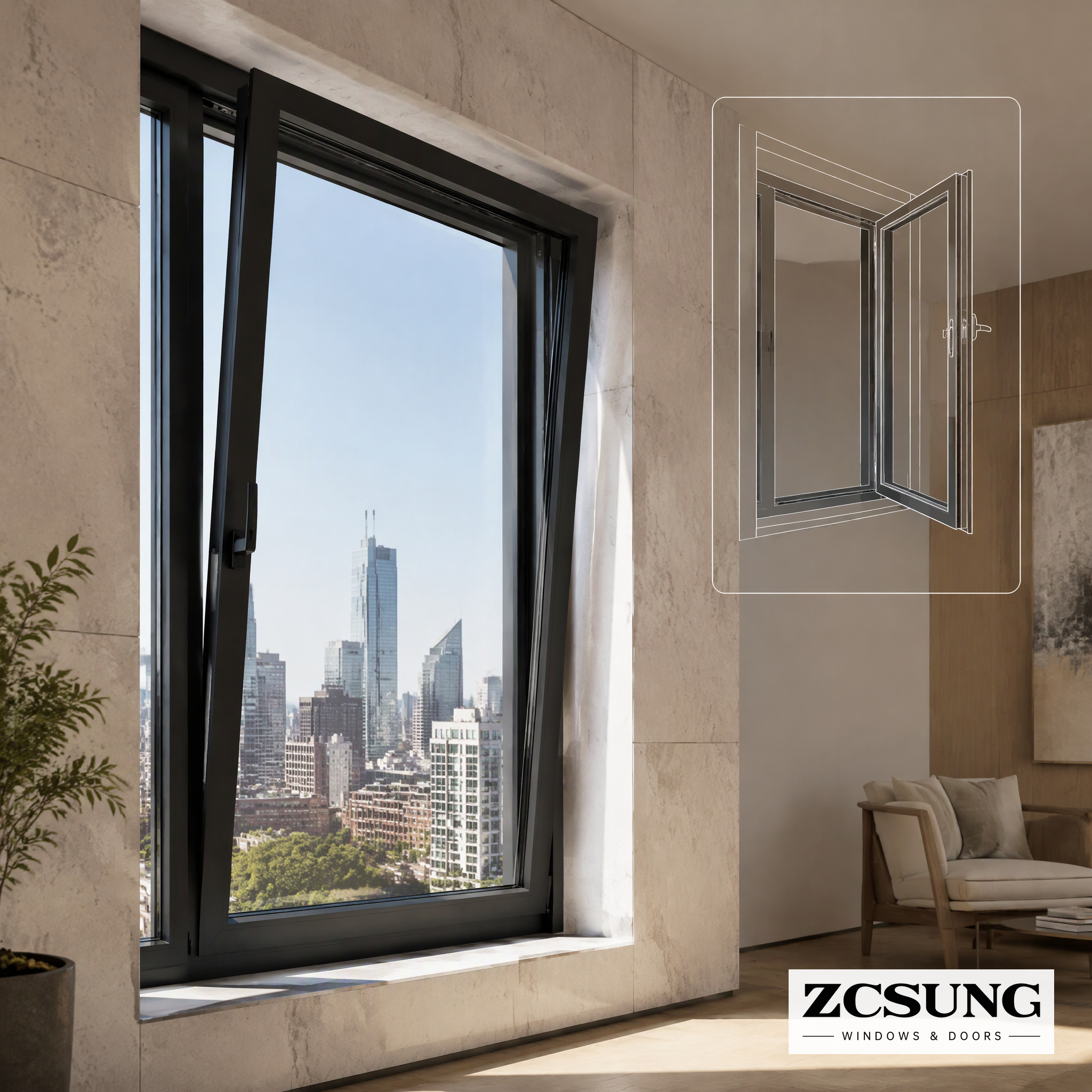
Tilt & turn is a European-origin dual-function window, now rising in popularity in luxury US new builds. It has two opening modes: tilt inward at top for micro ventilation, or fully swing inward for full access and cleaning.
- ✅ Pros: Multi-mode ventilation; top-tier security; easy inside cleaning; great sound insulation
- ❌ Cons: Higher cost; not a traditional American style, less familiar to local installers
- Best for: Modern luxury homes, urban high-rise residential, noise-sensitive city houses
Quick Selection Cheat Sheet
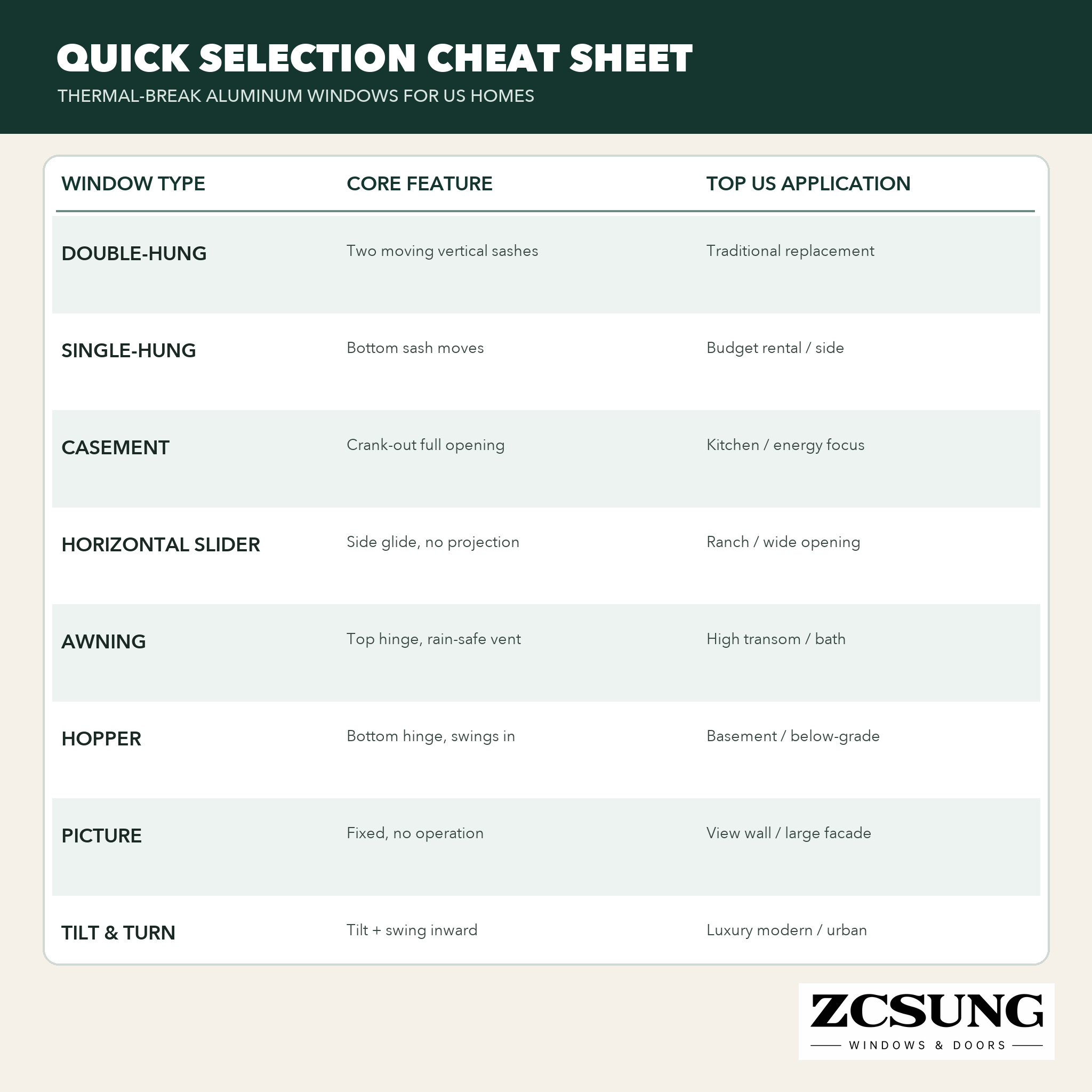
| Window Type | Core Feature | Top US Application |
|---|---|---|
| Double-Hung | Two moving vertical sashes | Traditional home whole-house replacement |
| Single-Hung | Only bottom sash moves | Budget rental & side windows |
| Casement | Crank out, full opening | Kitchen, energy-focused builds |
| Horizontal Sliding | Side glide, no out-swing | Ranch, wide living room openings |
| Awning | Top hinge, rain-proof vent | High transom windows, bathrooms |
| Hopper | Bottom hinge, swing in | Basement, below-grade |
| Picture | Fixed, no operation | View walls, large facade combinations |
| Tilt & Turn | Tilt + swing inward | Luxury modern & urban homes |
Why Choose ZCSUNG Thermal Break Aluminum Windows for US Homes
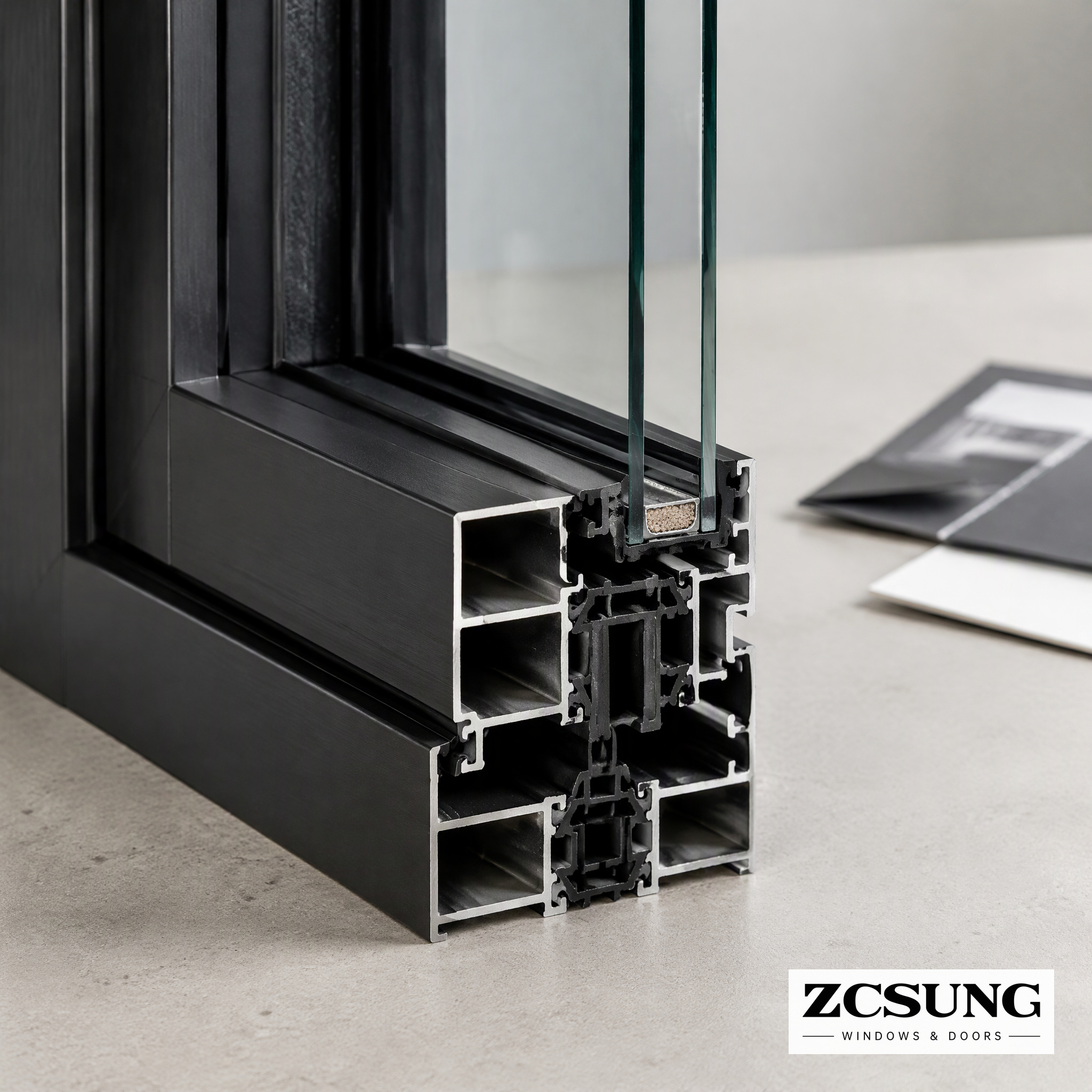
Not all aluminum windows perform equally in diverse US climates. ZCSUNG thermal break aluminum residential windows are engineered for the North American market:
- IGCC and SGCC certified tempered insulated glass, support double-pane / triple-pane, Low‑E coating and argon gas fill
- NFRC certified U-factor, SHGC and air leakage data for energy code compliance
- Full thermal break profile to stop heat transfer, eliminate condensation
- Custom nailing fin, flange options to match US new construction and retrofit installation
- Multiple finish options: powder coat, anodized, black / bronze / white / custom color
- Hurricane impact glass optional for coastal wind-borne debris requirements
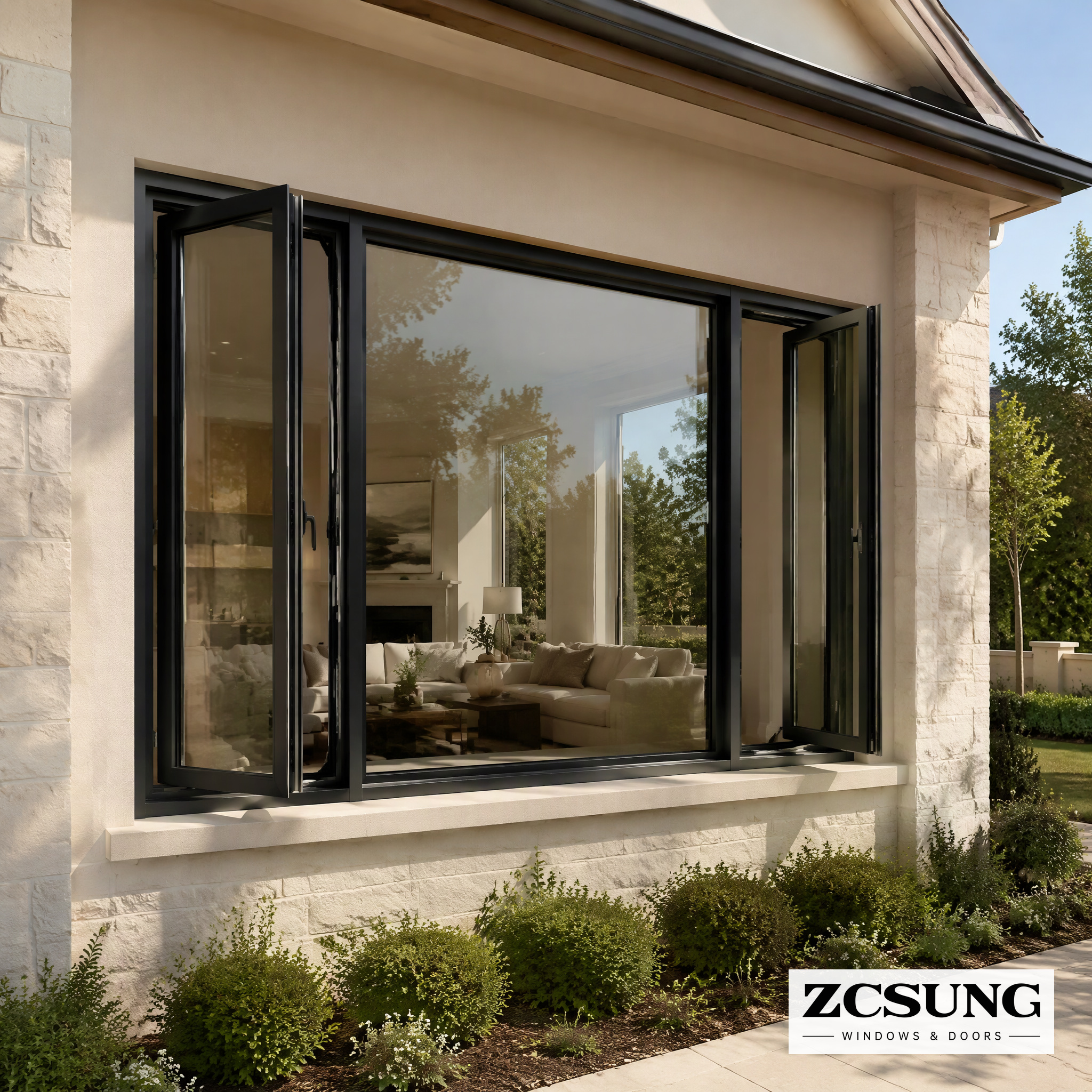
We supply mixed assemblies: picture + casement, double-hung + awning combo windows which are extremely common in American residentialdesign.
FAQ
Q1: Are aluminum double-hung windows popular in USA?
A1: Yes. Double-hung remains the dominant style for replacement projects, and thermal break aluminum versions replace old wooden units to cut maintenance work.
Q2: Which aluminum window is most energy-efficient for US homes?
A2: Casement windows have the best air sealing. Pair with IGCC triple-pane Low-E insulated glass to reach top energy performance.
Q3: Can these window styles meet Florida hurricane codes?
A3: Yes. We offer impact-rated aluminum casement, sliding and fixed picture windows with certified hurricane glass for coastal zones.
Q4: What glass certifications do you provide?
A4: All insulated and tempered glass can be produced with IGCC and SGCC certification, with test reports ready for US builders and inspectors.
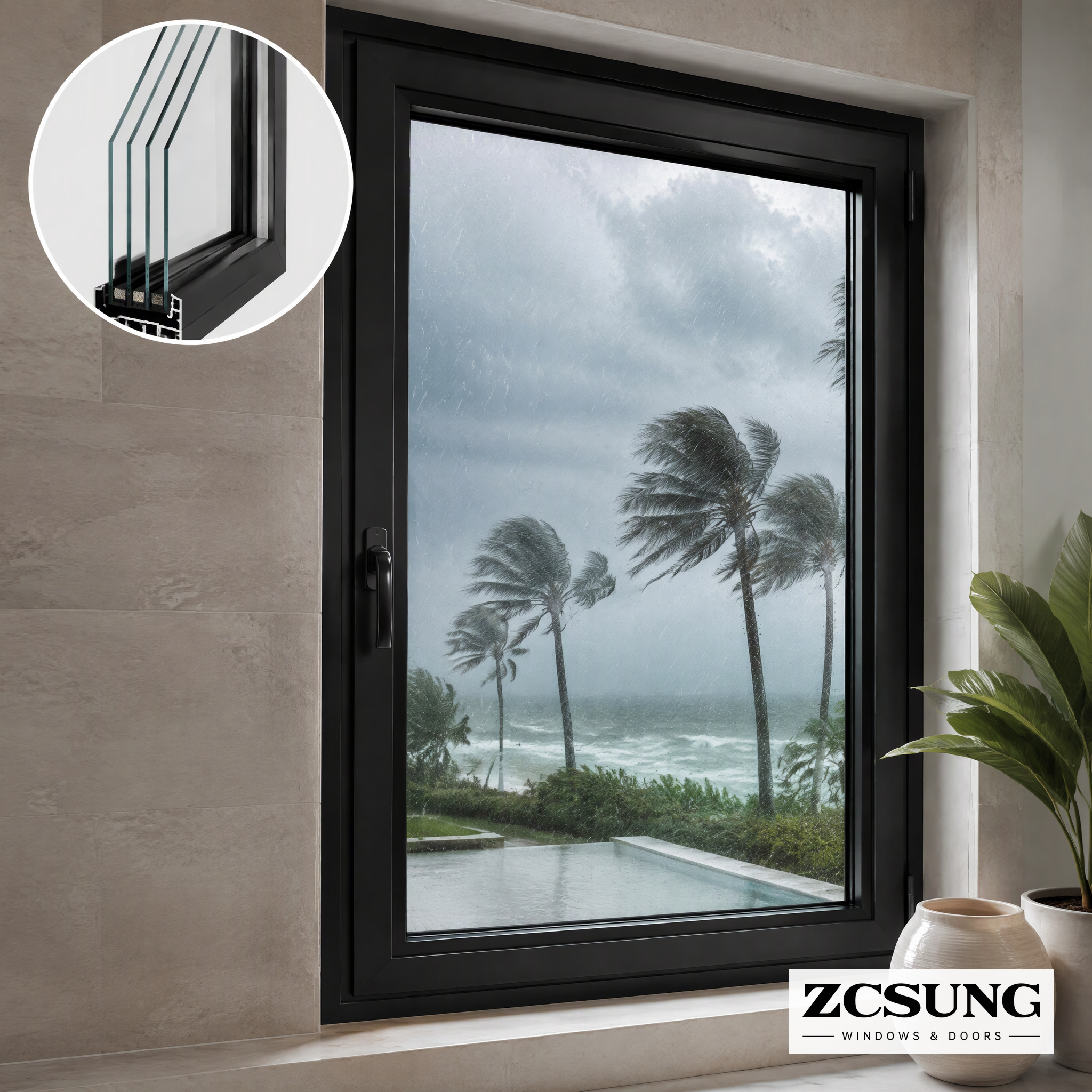
Table of Contents
- Introduction
- 1. Double-Hung Aluminum Windows
- 2. Single-Hung Aluminum Windows
- 3. Casement Aluminum Windows
- 4. Horizontal Sliding (Gliding) Aluminum Windows
- 5. Awning Aluminum Windows
- 6. Hopper Aluminum Windows
- 7. Fixed Picture Aluminum Windows
- 8. Bonus: Tilt & Turn Aluminum Windows (Fast-Growing Trend in USA)
- Quick Selection Cheat Sheet
- Why Choose ZCSUNG Thermal Break Aluminum Windows for US Homes
- FAQ